The short answer: A great custom restaurant sign is a backlit or dimensional metal logo — typically powder-coated aluminum or stainless steel — sized to your facade or interior wall, designed to be legible from across the parking lot or street, and built to survive years of weather, kitchen humidity, and salt air. Expect to spend between $1,800 and $8,000 for a serious exterior or feature interior piece, plus install. The right sign tells customers what your restaurant is about before they read the menu.
Restaurants live and die on first impressions. The sign on your facade is the single most-photographed, most-Instagrammed, most-remembered element of your brand — and it gets to do its job 24 hours a day, in every weather, for a decade or more. After fabricating hundreds of custom restaurant signs for taprooms, fine dining rooms, neighborhood grills, and brewpubs from Maryland to Montana, we’ve learned that the restaurants that invest in proper metal signage almost universally outperform their neighbors on foot-traffic conversion. This guide breaks down everything restaurant owners and operators should know before commissioning a custom metal sign — materials, sizes, lighting, costs, permits, and the small details that separate a forgettable storefront from a destination.
Why Restaurants Choose Custom Metal Signs Over Other Materials
Most restaurants we work with start the conversation looking at vinyl, acrylic, or wood. There’s nothing wrong with those materials in isolation — they’re cheaper up front, and for short-term concepts (pop-ups, food trucks, seasonal patios) they can be the right call. But for restaurants planning to stay in business more than three years, custom metal signs win on every long-term metric:
- Longevity: A powder-coated aluminum sign typically lasts 15–25 years outdoors with no maintenance beyond an occasional wipe-down. Vinyl fades and peels in 3–5; wood warps and rots in 5–10.
- Perceived value: Metal signals investment, permanence, and quality. Diners read those cues unconsciously before they read a menu.
- Light interaction: Metal is the only practical material for halo lighting, push-through lighting, and most modern illuminated sign styles.
- Repair-ability: A metal sign that gets a scratch or a bent corner can be touched up. A scratched acrylic sign or torn vinyl is usually a full replacement.
If you want a deeper material comparison, our post on aluminum vs. stainless steel for metal signs walks through the trade-offs in detail.
The Most Common Restaurant Sign Types (and When to Use Each)
Every restaurant we quote falls into one of a few sign archetypes. Picking the right archetype before you start designing saves weeks of revisions and thousands of dollars.
1. Exterior Building-Mount Logo Sign
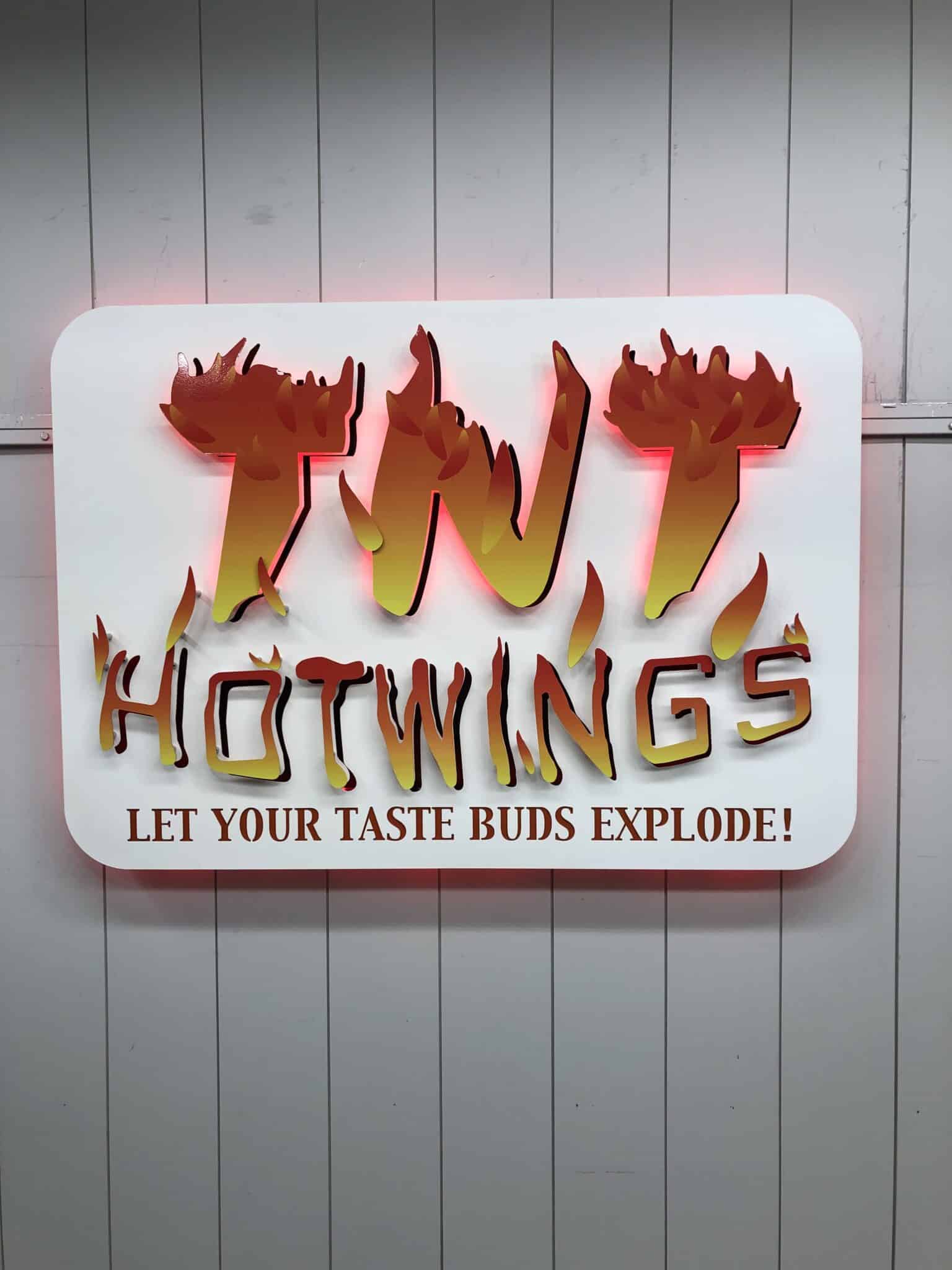
The classic over-the-door logo. Almost always dimensional metal letters or a flat panel with the brand mark. This is what people photograph and what shows up in Google Street View for the next ten years. Build it well.
2. Backlit / Halo-Lit Logo Sign
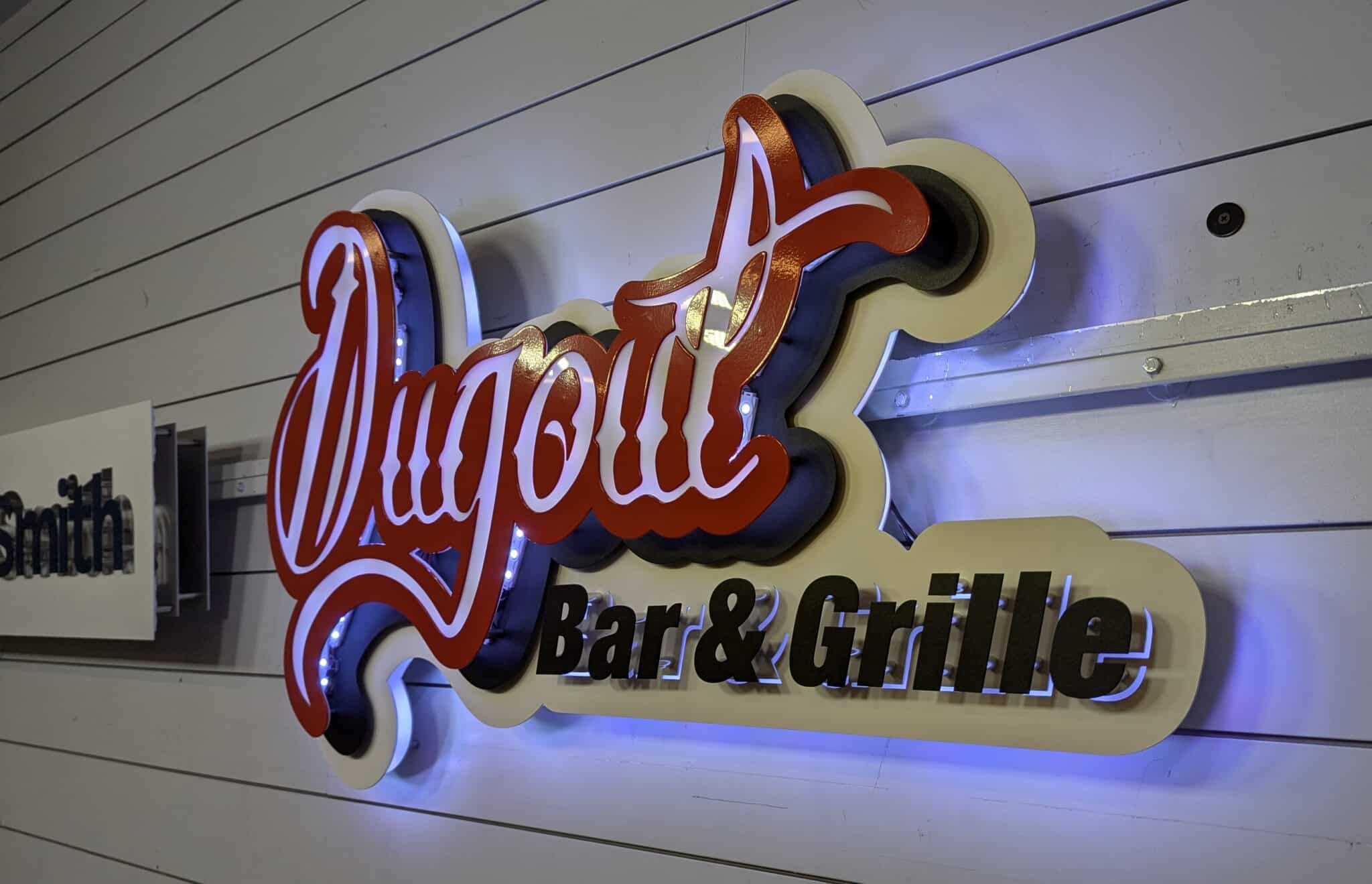
A flat or shallow dimensional metal logo with LED lighting behind it, so the wall behind the sign glows in the shape of the logo. This is the most-requested style in our restaurant work for the last three years — it photographs beautifully at night and reads as upscale without screaming “Las Vegas.” See our illuminated sign options for more.
3. Blade Sign (Projecting Sign)
Mounted perpendicular to the building so foot-traffic walking along the sidewalk sees the sign before they reach your door. Critical for downtown locations, walkable retail districts, and any restaurant where most customers arrive on foot.
4. Interior Feature Wall / Lobby Sign
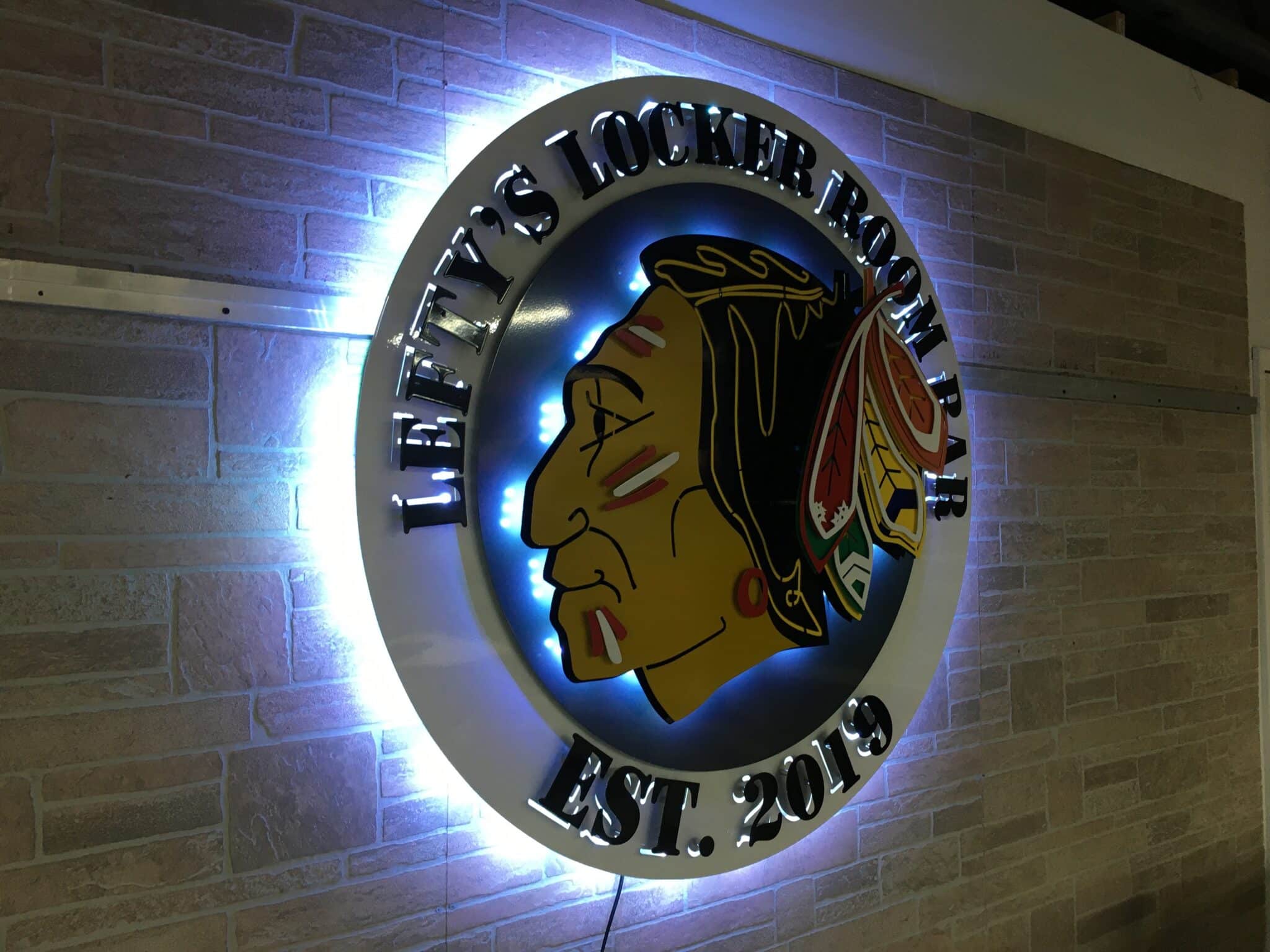
Often a 3D metal logo on the host stand wall, behind the bar, or in a private dining room. Becomes the de facto Instagram backdrop. We’ve fabricated dozens of these — they’re frequently the single highest-ROI sign in a restaurant because diners photograph them and tag the restaurant for free.
5. Brewery Tap List / Menu Board (Cut from Metal)
Brewpubs and taprooms increasingly want their tap lists laser-cut into metal panels with chalkboard or magnetic inserts. Looks better than a vinyl board, doubles as decor when the bar is closed.
Materials: What Restaurants Should Actually Buy
In our experience, 90% of restaurant signs should be one of three materials. Anything else is usually a designer’s vanity choice or a misread of the environment.
| Material | Best For | Typical Lifespan | Relative Cost |
|---|---|---|---|
| Powder-coated aluminum | Most exterior signs, especially coastal or humid climates | 15–25 years | $$ |
| Stainless steel | Upscale concepts, exposed steel architecture, raw brushed look | 25+ years | $$$ |
| Rustic / weathered steel | Brewpubs, BBQ joints, farm-to-table concepts | 15+ years (patina deepens) | $$ |
| Copper or brass | Fine dining, historic buildings, statement interior pieces | 30+ years | $$$$ |
A practical rule we share with restaurant clients: if your sign will live on a south-facing wall in full sun, or anywhere within five miles of salt water, powder-coated aluminum is the safe answer. If you want the sign to look like a working piece of industrial equipment — brewpubs and craft kitchens especially — weathered or distressed steel ages beautifully and looks better at year five than year one.
Lighting: Halo, Face-Lit, or None?
Most restaurants we quote ask for lighting on at least their primary exterior sign. The three options are simpler than the proposals make them sound:
- Halo lighting (back-lit): LEDs behind the sign throw a soft glow onto the wall around the logo. The logo itself stays dark and dimensional. Looks expensive, photographs beautifully, doesn’t blast light into neighboring windows. Our most-requested style.
- Face lighting (front-lit / push-through): The logo itself glows. Either the metal is cut out and acrylic shines through, or letters are lit from the front. Higher visibility for drive-by traffic; less subtle.
- Unlit: Perfectly valid for daytime-only concepts (breakfast spots, coffee houses) or restaurants in well-lit districts. Saves significant cost and complexity.
For a deeper dive on lighting choices specifically, see our guide on LED benefits in custom sign design and our lighted business signs overview.
How Much Custom Restaurant Signs Cost
Costs depend on size, material, lighting, and finish, but here are realistic ranges from real restaurant quotes we’ve written this year:
- Interior feature wall logo, unlit, 24–36″ wide: $1,200–$2,500
- Interior feature wall logo, halo-lit, 36–48″ wide: $2,500–$4,500
- Exterior building-mount logo, unlit, 48″ wide: $2,800–$5,000
- Exterior building-mount halo-lit logo, 60–72″ wide: $4,500–$8,500
- Blade / projecting sign with bracket, 24–36″ wide: $1,800–$4,000
- Custom tap list / menu board, 36–48″ wide: $1,400–$3,200
Installation typically runs an additional $400–$1,500 for interior pieces and $1,000–$3,500 for exterior pieces depending on access, mounting surface, and whether electrical hookup is required. For a fuller breakdown across all sign types, see our business signage cost guide.
One cost-saving note from years of restaurant work: many restaurant owners over-spec lighting and under-spec size. A 4-foot halo-lit sign reads beautifully from 30 feet but disappears from the road at 200 feet. If you have a parking lot, build bigger and consider face-lighting; if you have a sidewalk, build smaller and halo-light it.
Permits, Codes, and Things That Will Slow You Down
Sign permits are the single most common cause of restaurant sign delays we see. A few realities we’ve learned to communicate up front:
- Most municipalities cap sign square footage based on building frontage. Check before you fall in love with a design.
- Historic districts — common in older downtowns like Frederick, Maryland, or any pre-war town center — often require review by a historic preservation board, which can add 6–12 weeks. Whether you’re a brewpub in Old Town Alexandria or a bistro in downtown DC, ask about historic-district overlays before you sign a lease.
- Shopping center landlords usually have their own sign criteria that supersede city code. Get the sign criteria document before you start designing.
- Internally-illuminated signs require an electrician on the install, which means inspection. Build that into your timeline.
We’ve fabricated and shipped restaurant signs to 46 of 50 US states from our Frederick, MD shop. The work that goes well almost always starts with a landlord or city sign-criteria PDF in hand on day one. The work that goes badly almost always starts with “We’ll figure out the permit later.”
Interior Signs: The Most Underrated ROI in Restaurant Branding
If we could only give one piece of advice to a new restaurant owner about signage, it would be this: budget for an interior feature sign before you budget for a fancier exterior one.
Here’s why. The exterior sign brings someone in. The interior sign — a 3D metal logo behind the bar, a halo-lit wordmark behind the host stand, a laser-cut tap list panel — is what gets photographed, tagged, and posted to Instagram by every customer for the next decade. We’ve had brewpub clients tell us their interior feature wall sign generated more attributable foot traffic, via social photo tagging, than any paid ad they ran in year one. That’s why interior signage deserves a serious slice of any restaurant branding budget.
The ShieldCo Process for Restaurant Signs
Every restaurant project we run goes through the same five phases. Knowing what each looks like helps you plan a realistic install date:
- Design + 3D mockup — We translate your logo into a fabricator-ready vector, propose materials and mounting, and produce a photo-realistic 3D mockup on your actual building or interior wall. (3–7 business days.)
- Quote + approval — Detailed spec, sample finishes if requested, signed approval.
- Fabrication — Laser cutting, welding, finishing, and powder coating in our Frederick, MD shop. (Typically 2–4 weeks.)
- Packing + shipping — Custom crating and free freight in the continental US. See our packing process.
- Installation — Either your local installer with our template, or ShieldCo’s national install network.
For a complete walkthrough of how we approach every job, see our process page.
Frequently Asked Questions
How long does a custom restaurant sign take to make?
From approved design to delivered sign, plan on 4–6 weeks for a typical exterior or interior metal sign, plus install time. Halo-lit and complex multi-piece signs run 5–8 weeks. We’ve turned rush projects in 2–3 weeks when timing demanded it, but standard lead times produce better work.
Do I need a permit for a restaurant sign?
For any exterior sign, almost always yes — both from your municipality and (if you’re in a shopping center or mixed-use building) your landlord. Interior signs typically don’t require a permit. Always check before you order; we can supply engineering drawings and material specs to make the permit process smoother.
Can I get a metal sign that matches my exact brand colors?
Yes — we color-match any logo to a Pantone, RAL, or paint code via powder coating, and we can also produce raw brushed, mill, weathered, or patinaed finishes that don’t use paint at all. For multi-color logos, each color is masked and powder-coated separately.
How do brewery and taproom signs differ from regular restaurant signs?
Brewery clients almost always want a “working metal” aesthetic — distressed steel, weathered patinas, exposed welds, industrial finishes. We also fabricate a lot more laser-cut menu and tap-list panels for breweries than for full-service restaurants. The exterior building-mount sign principles are the same; the styling is different.
Will my metal sign hold up in coastal humidity / salt air?
Powder-coated marine-grade aluminum is the answer for coastal restaurants. Avoid raw steel or untreated copper within 5 miles of saltwater unless you specifically want aggressive patina. We’ve shipped signs to coastal restaurants from Maine to the Florida Keys with no field failures when the right material and coating are spec’d.
Ready to Build Your Restaurant’s Sign?
Whether you’re opening a new concept in downtown Frederick, refreshing an established neighborhood spot in the DC metro, or rolling out signage across a multi-location brewery footprint, we’d love to quote your project. Send us your logo and the dimensions of the wall you’re working with, and we’ll come back with a 3D mockup and an honest range of materials and finishes that fit your vision and budget. See our project gallery for more restaurant work, or read about ShieldCo’s story.