The short answer: most medical practices need a coordinated three-part sign system — an exterior identity sign, a lobby or reception sign, and an ADA-compliant wayfinding set — and powder-coated aluminum is the material that handles all three best. Aluminum resists corrosion, survives daily disinfectant wipe-downs, and costs less to ship and install than steel. Below we break down what each part of the system does, what it costs, and which ADA rules actually apply to your signs.
What Makes Medical Office Signage Different
Signage for a healthcare practice does a job that retail signage does not. A patient arriving for a first appointment is often anxious, sometimes in pain, and frequently running late. Your signs are the first thing that either calms that person down or adds to the stress.
That changes the design brief in three specific ways:
- Legibility beats personality. Clean sans-serif letterforms and high contrast matter more than a clever typeface.
- Cleanability is a material requirement. Healthcare surfaces get wiped with disinfectant constantly. Finishes have to tolerate it.
- Accessibility is not optional. Room identification signs in a medical building are covered by federal accessibility rules.
In our experience fabricating custom medical office signs, practices that treat signage as one connected system — rather than buying an exterior sign now and worrying about interior signs later — end up with a cleaner result and spend less overall. The lettering, finish, and mounting style carry through from the parking lot to the exam room door.
The Sign System Every Medical Practice Needs
1. Exterior identity sign
This is the sign that gets a patient into the right parking lot. For a standalone practice, that usually means a monument sign at the road or a dimensional wall-mounted logo on the building face. For a suite inside a medical office building, it is typically a panel on a shared tenant directory.
Size the exterior sign for the speed of the road, not for the wall. A sign read at 40 mph needs roughly four times the letter height of one read from a parking space. Check your municipality’s sign ordinance before finalizing dimensions — many jurisdictions cap total square footage by lot frontage.
2. Lobby and reception sign
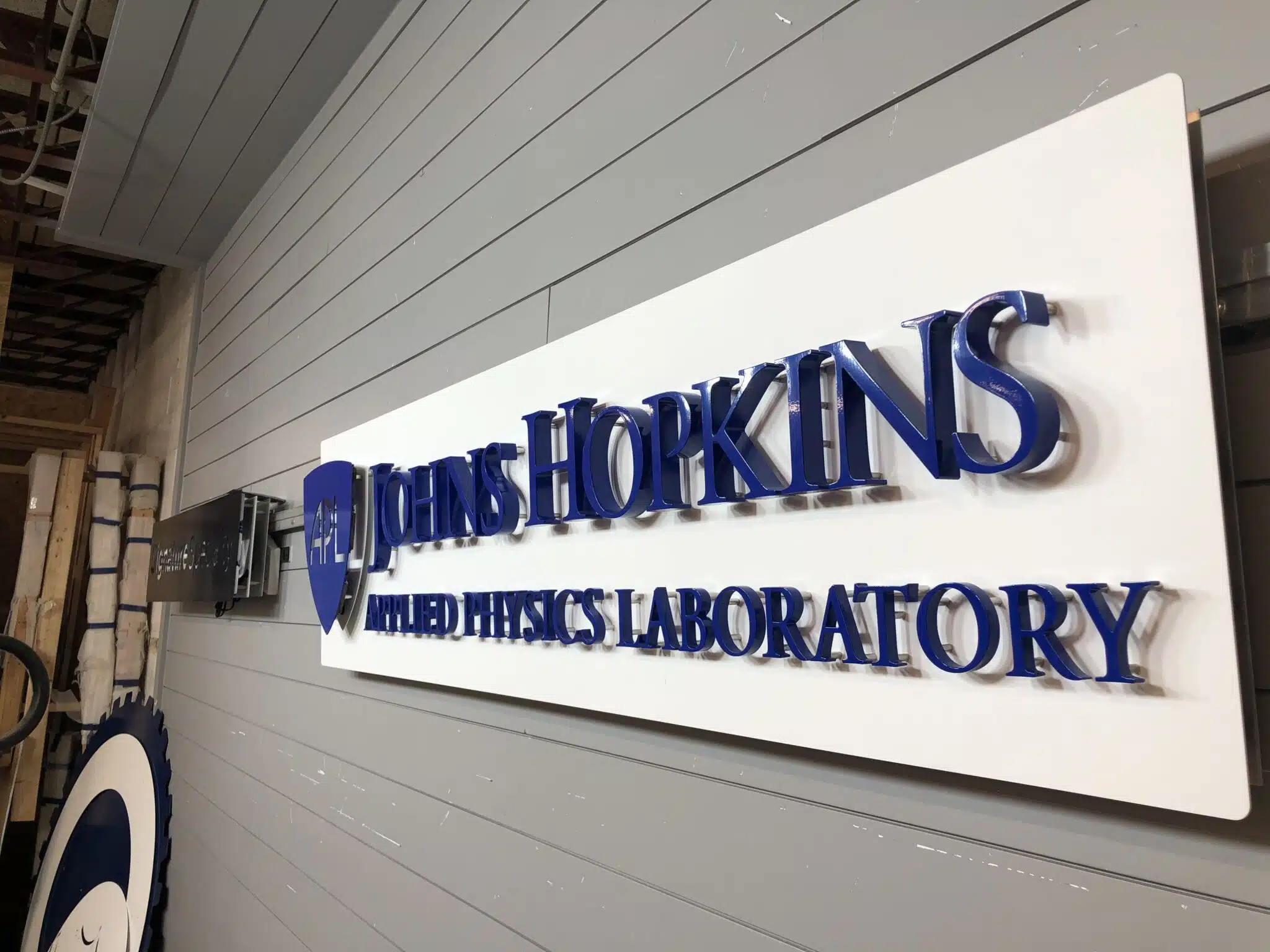
The reception sign is the one patients photograph and remember. This is where a dimensional metal sign earns its cost. Brushed aluminum or stainless steel letters standing off the wall read as permanent and credible in a way that a printed vinyl graphic does not.
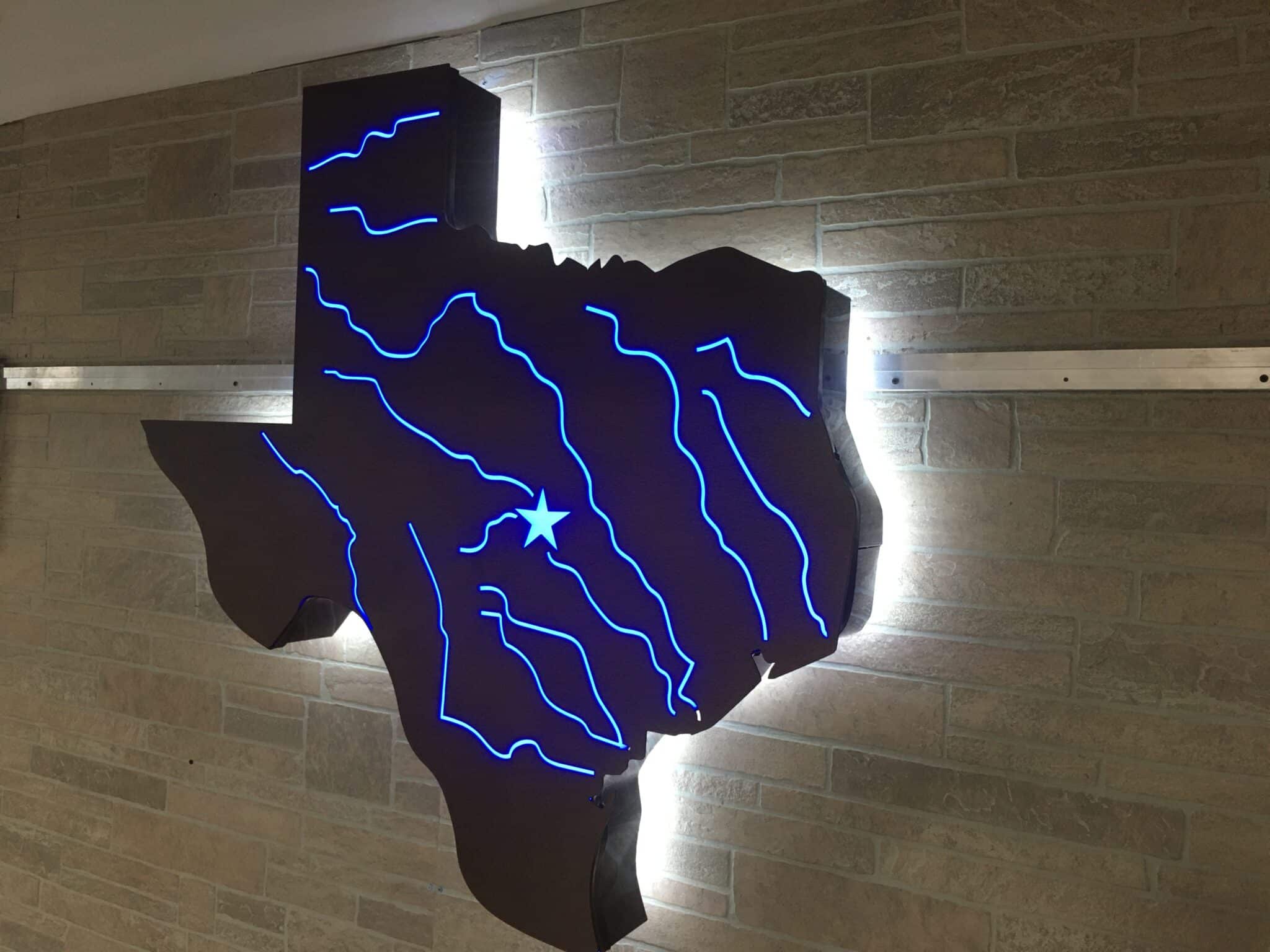
Halo lighting works especially well in medical lobbies. It gives the wall a soft glow without the glare of a face-lit box, which matters in a room where people sit for twenty minutes. Our illuminated sign options cover both halo-lit and backlit builds.
3. Wayfinding and room identification
This is the layer most practices under-plan. Wayfinding covers directional arrows at corridor junctions, department or provider directories, and individual room signs. In a multi-provider practice, a modular directory that lets you swap a single name plate saves real money when staff changes.

Best Materials for Medical Office Signs
Material choice drives cost, lifespan, and how the sign holds up to cleaning. Here is how the common options compare for healthcare use.
| Material | Typical lifespan | Disinfectant tolerance | Relative cost | Best use |
|---|---|---|---|---|
| Powder-coated aluminum | 15–20+ years | Excellent | $$ | Exterior and interior, most practices |
| Stainless steel | 20+ years | Excellent | $$$ | Premium lobbies, hospital settings |
| Brushed brass or copper | 20+ years | Good (patinas over time) | $$$ | Established practices, historic buildings |
| Acrylic | 5–10 years | Fair (can craze) | $ | Budget interior room signs |
| Printed vinyl | 2–5 years | Poor | $ | Temporary or seasonal messaging |
Aluminum wins most healthcare projects on the balance of the three columns that matter. It will not rust if the coating is breached, it weighs about a third of steel, and a quality powder coat holds color for well over a decade. Our post on powder-coated business signs covers why that finish outperforms wet paint, and our in-house powder coating is how we control that quality directly.
For a lobby where the practice wants a heavier, more clinical read, stainless steel is worth the premium. It is the material of choice in hospital environments for the same reason it is used for equipment — it takes abuse and cleans up perfectly.
ADA Compliance: What Actually Applies
This is the area where we field the most questions, and where the most money gets wasted on signs that have to be redone.
The key distinction is between identification signs and directional signs. Under the 2010 ADA Standards for Accessible Design, signs that identify a permanent room or space — “Exam 3,” “Restroom,” “Lab” — must include raised characters and Grade 2 Braille. Directional and informational signs do not require Braille, but they still have to meet contrast and font requirements.
Practical rules that catch people out:
- Raised characters must be 1/32″ proud of the surface, in a sans-serif font, sized 5/8″ to 2″ tall.
- Tactile signs mount 48″–60″ above the floor, on the latch side of the door.
- Highly reflective finishes are non-compliant on tactile signs — a mirror-polish stainless room sign will fail.
- Your exterior monument sign and lobby logo sign are generally exempt from tactile requirements.
That last point matters for budgeting. You can specify a beautiful polished lobby piece without triggering ADA tactile rules, then use matte-finish signs for the room identification layer. The International Sign Association publishes additional guidance on code and permitting if you want to go deeper.
What Custom Medical Office Signs Cost
Pricing varies with size, material, and lighting more than with anything else. These are realistic 2026 ranges for fabricated metal work:
- Interior lobby logo sign (non-lit, 24″–36″ wide): $900–$2,500
- Halo-lit lobby sign (36″–60″ wide): $3,000–$7,500
- Exterior building letters (non-lit): $1,500–$5,000
- Monument sign (fabricated metal face): $5,000–$15,000+
- ADA room signs: $45–$150 each
- Directory with changeable name plates: $600–$2,500
A single-location practice fitting out a new suite typically lands between $6,000 and $18,000 for a complete system. For more on how the variables move, see our breakdown of business signage costs.
What We’ve Learned Fabricating Healthcare Signage
A few things only come up after you have built and installed these signs for a while.
Disinfectant is harder on signs than weather. We have seen interior acrylic signs in high-traffic clinics craze and cloud within two years from repeated quaternary ammonium wipe-downs. The same room with powder-coated aluminum plates looks new. If your staff cleans hard, specify metal.
Reception walls are rarely what you think. Medical build-outs often have a decorative panel, tile, or a glass transaction window right where the logo should go. We ask for wall-section photos before quoting, because a stud-mounted stud installation and a tile-surface installation are different jobs. Getting this wrong is the most common source of install-day delays.
Provider names change more often than the practice name. Build the directory to be modular from day one. We have replaced fully engraved directory panels for practices that added two associates in eighteen months — an avoidable cost.
Lobby lighting fights your sign. Recessed downlights directly above a brushed metal sign create hot spots and wash out the finish. When we know the lighting plan, we adjust the brush direction or step down to a matte powder coat to keep the face reading evenly.
Whether you’re a family practice in downtown Frederick, a specialty group in the DC metro area, or a hospital system across the country, the fabrication and finishing happen in our Maryland shop and ship nationwide. You can see completed work in our project gallery, or read how interior signage strengthens brand identity.

Frequently Asked Questions
Do all signs in a medical office need Braille?
No. Only signs that identify a permanent room or space require raised characters and Grade 2 Braille. Directional signs, your lobby logo, and the exterior building sign are generally exempt, though contrast and font rules still apply.
How long does a custom medical office sign take to produce?
Most fabricated metal signs run three to five weeks from approved artwork. Illuminated builds add about a week. Permitting for exterior monument signs is usually the longest step and varies widely by municipality.
Can a metal sign be installed on tile or glass?
Yes. Tile installations use adhesive studs or a hidden backer plate rather than drilling. Glass typically uses standoff hardware with a clear or frosted backer. Send photos of the intended wall before ordering so the mounting method can be engineered in.
What is the best material for a medical office exterior sign?
Powder-coated aluminum for nearly all cases. It resists corrosion, holds color for 15 to 20 years, and costs meaningfully less to fabricate and install than stainless. Stainless steel is the upgrade when the building calls for a heavier, more clinical presence.
Should dental practices follow the same guidance?
Largely yes — the materials, ADA rules, and mounting considerations are identical, though the design emphasis differs slightly. See our dental office signs page for that detail. Larger facilities should also see our hospital signage page.
Getting Started
Start with a walkthrough of the patient’s path: parking lot, entrance, reception desk, corridor, exam room. Note every point where someone has to make a decision about where to go. That list is your sign schedule. From there, choose one material and one letterform and carry them through every piece.
If you want help translating that walkthrough into a quote, send us your logo files and a few photos of the space. We handle design, fabrication, finishing, and packing in house, and we ship free anywhere in the continental US. See our process or browse lobby sign options to start.