• Skip to primary navigation
  • Skip to main content
  • Skip to primary sidebar
  • Process
  • Blog
  • Login
  • My Cart

ShieldCo Art

ShieldCo Art logo

Custom Metal Signs & Business Logos

  • Products
    • Shop By Type

      • Business Signs
      • 3D Signs
      • Blade Signs
      • Lobby Signs
      • Logo Signs
      • Monument Signs
      • Illuminated Signs
    • Shop By Material

      • Metal Signs
      • Aluminum
      • Brass
      • Copper
      • Distressed Steel
      • Rustic Metal
      • Stainless Steel
      • Steel
    • Shop By Industry

      • Bank Signs
      • First Responders Signs
      • Church Signs
      • Dental Office Signs
      • Hospital Signs
      • Hotel Signs
      • Law Firm Signs
      • Medical Office Signs
      • Military Signs
      • Restaurant Signs
      • School Signs
      • Veterinary Signs
    Allegiance Heating & Air logo

    Free Quote For Business Signs

    Veteran Owned

  • Services
    • 3D Mock-Ups
    • Designing Your Sign
    • Installation
    • Laser Cutting
    • Laser Engraving
    • Lighting
    • Packing & Shipping
    • Powder Coating
  • Gallery
    • Gallery
    • Case Studies
  • About
    • Blog
    • Contact
    • Gallery
    • Locations
  • Login
  • My Cart

Custom Signs

July 13, 2026 by Luke Markey

Backlit metal logo signs are dimensional metal versions of your logo mounted with LED lighting behind or within them, so the sign glows day and night. The most popular style is halo-lit (also called reverse-lit), where light spills out from behind the letters or shapes to create a soft glow on the wall. If you want a premium, always-on branding element that looks as good at 9 a.m. as it does after dark, a custom backlit metal logo sign is one of the highest-impact investments you can make in your space.

By Luke Markey, Co-Founder of ShieldCo Art — custom metal sign specialists based in Frederick, Maryland, with signs installed in 46 of 50 US states.

Backlit metal logo sign for the 57th Weapons Squadron glowing on an interior wall
A halo-lit metal squadron emblem we fabricated for the 57th Weapons Squadron — the glow makes the crest read from across the room.

What Are Backlit Metal Logo Signs?

A backlit metal logo sign takes your brand mark — cut from aluminum, steel, or another metal — and pairs it with concealed LED lighting so the logo appears to glow. Unlike a printed panel or a flat vinyl decal, these are dimensional pieces that stand off the wall on hidden mounts, giving your logo real depth and a shadow line even before you turn the lights on.

The term “backlit” covers a family of lighting approaches, but for logos the two you will actually choose between are halo-lit and face-lit. Both belong to the broader category of custom illuminated signs, and both start with a precisely cut custom logo sign. The difference is simply where the light escapes.

Halo-Lit vs Face-Lit: The Two Main Styles

Choosing between halo-lit and face-lit is the single biggest decision you will make with a backlit metal logo sign, because it changes the entire look. Here is how they compare.

Feature Halo-Lit (Reverse-Lit) Face-Lit (Front-Lit)
Where light shows Glows on the wall behind the logo Glows through the front face of the logo
Best surface Solid metal letters/shapes Metal frame with a translucent acrylic face
Daytime look Clean, solid metal — premium and understated Colored or white faces visible
Vibe Sophisticated, architectural Bold, high-visibility, retail
Typical use Lobbies, offices, upscale storefronts Restaurants, retail, high-traffic exteriors

Halo-Lit (Reverse-Lit)

Halo-lit signs have the LEDs mounted on the back of solid metal letters or shapes. The light bounces off the wall behind them, producing a soft halo that outlines the logo. During the day you see clean, solid metal; at night you get that glow. This is the style most companies picture when they imagine a modern lobby sign, and it is our most-requested option for professional interiors.

Face-Lit (Front-Lit)

Face-lit signs use a metal return (the side wall of the letter) with a translucent acrylic face, so the light shines straight out toward the viewer. These read from farther away and hold up well outdoors, which is why they are popular for restaurants and retail. Many businesses combine the two — solid metal for the wordmark and a face-lit accent for a single icon.

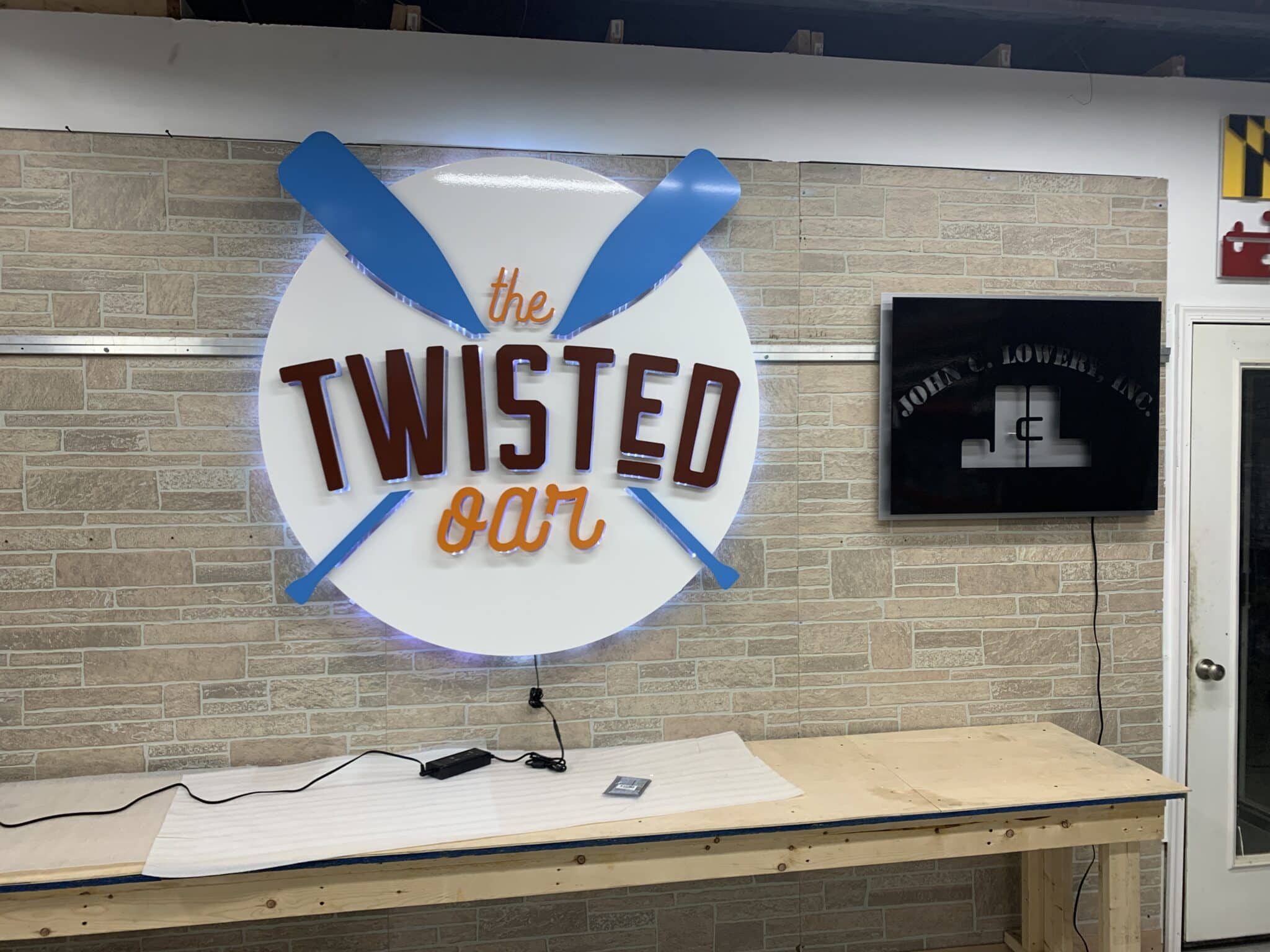
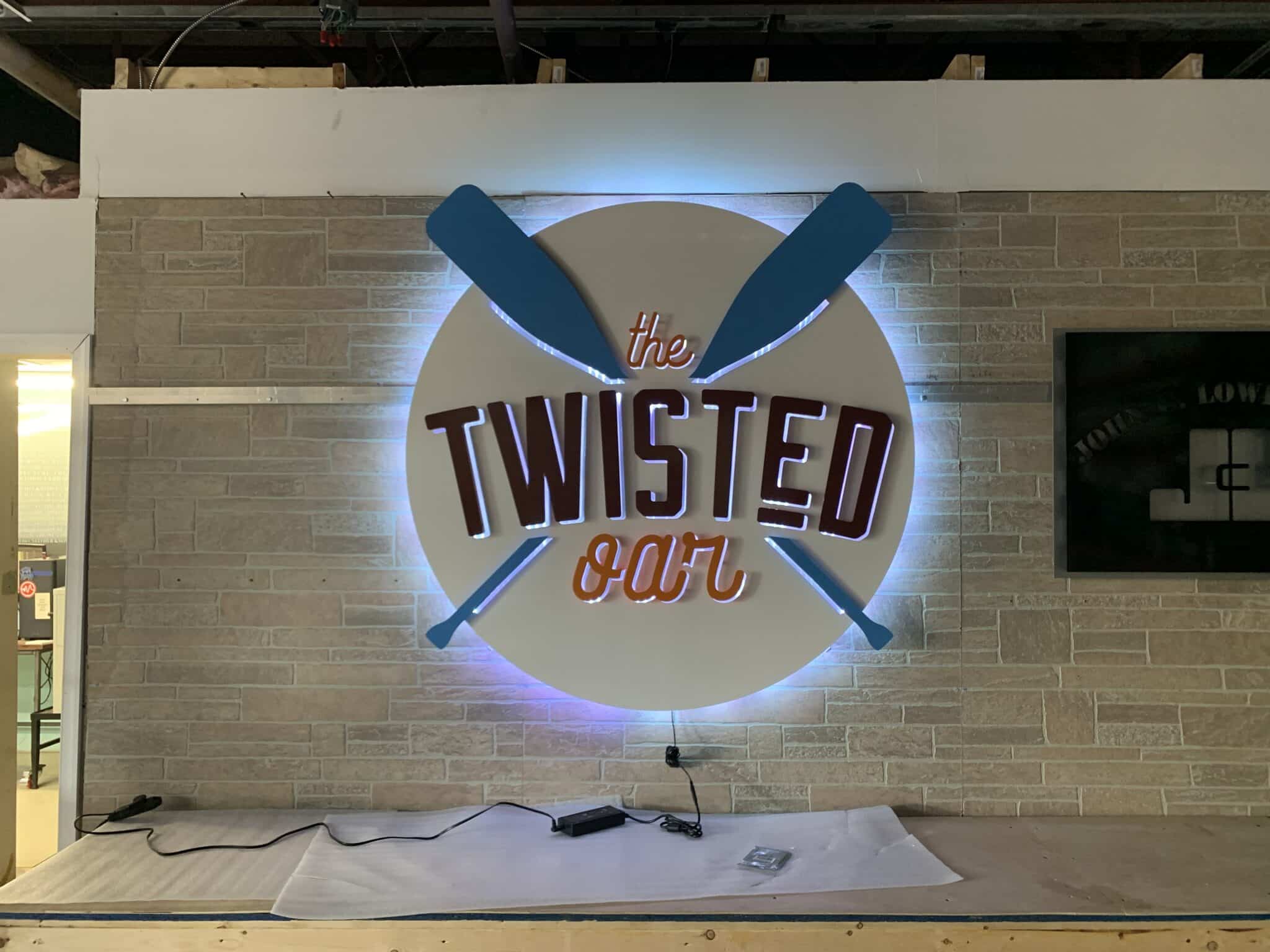
Illuminated dimensional metal logo sign at The Twisted Oar restaurant entrance
The backlit logo we built for The Twisted Oar — the glow gives the entrance a warm, welcoming anchor at night.

How Backlit Metal Logo Signs Work

Under the hood, a backlit metal logo sign is simpler than it looks. Here are the core components:

  • The metal logo itself — laser-cut or CNC-cut from aluminum, steel, or stainless, then finished and (for halo-lit signs) hollowed out or built with a return to house the lighting.
  • LED modules — low-voltage, long-life LEDs mounted inside or behind the logo. We size the color temperature to the space (warm white for hospitality, cool white for tech and healthcare).
  • A low-voltage transformer — converts building power down to the voltage the LEDs need. This is usually hidden in the wall or ceiling.
  • Standoffs or a mounting pattern — hold the logo off the wall at a consistent depth, which is what creates the halo gap.

In our experience, the depth of that standoff gap is what separates a great halo-lit sign from a mediocre one. Too tight and the glow looks like a thin outline; too far and it washes out. We prototype the gap for the specific wall color before we ever ship a sign, because a glow that looks perfect on white drywall can disappear on a dark accent wall. For a deeper look at the lighting side, our guide on how LED benefits enhance custom sign design walks through color temperature and brightness in more detail.

Best Applications for Backlit Metal Logo Signs

Backlit logo signs earn their keep anywhere your brand needs to make a first impression. The strongest use cases we see:

  • Corporate lobbies and reception walls — a halo-lit logo behind the front desk instantly signals that a company is established.
  • Restaurants, breweries, and taprooms — warm face-lit or halo-lit signs draw the eye at the entrance and photograph beautifully.
  • Storefronts and exterior building faces — a glowing logo keeps your brand visible after business hours.
  • Conference rooms and executive suites — a subtle halo adds polish without shouting.

If your logo is more sculptural than illuminated, a non-lit 3D metal sign may be the better fit — but when you want presence after dark, backlit wins.

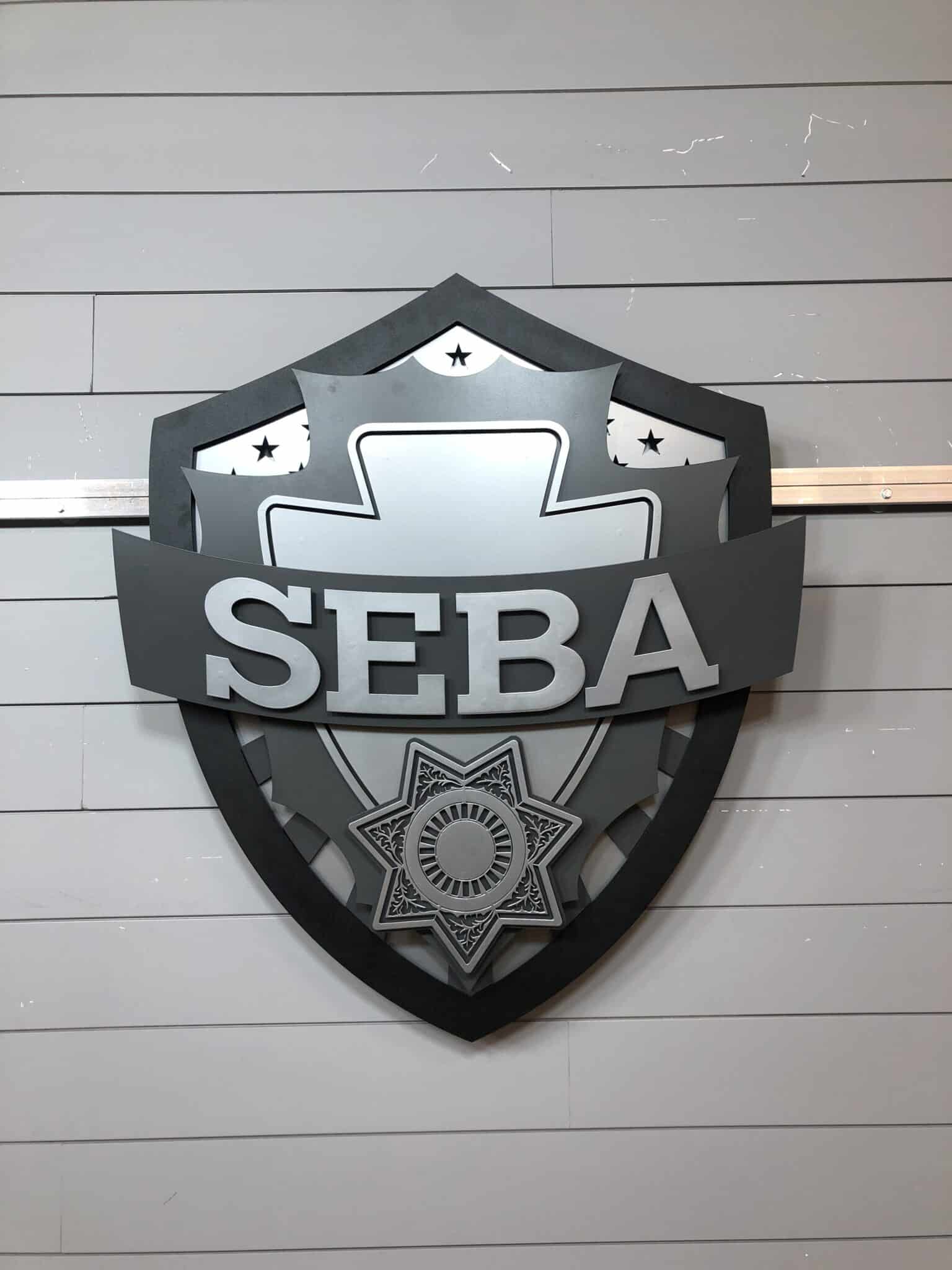
Halo-lit metal company logo sign with a soft glow on an office wall
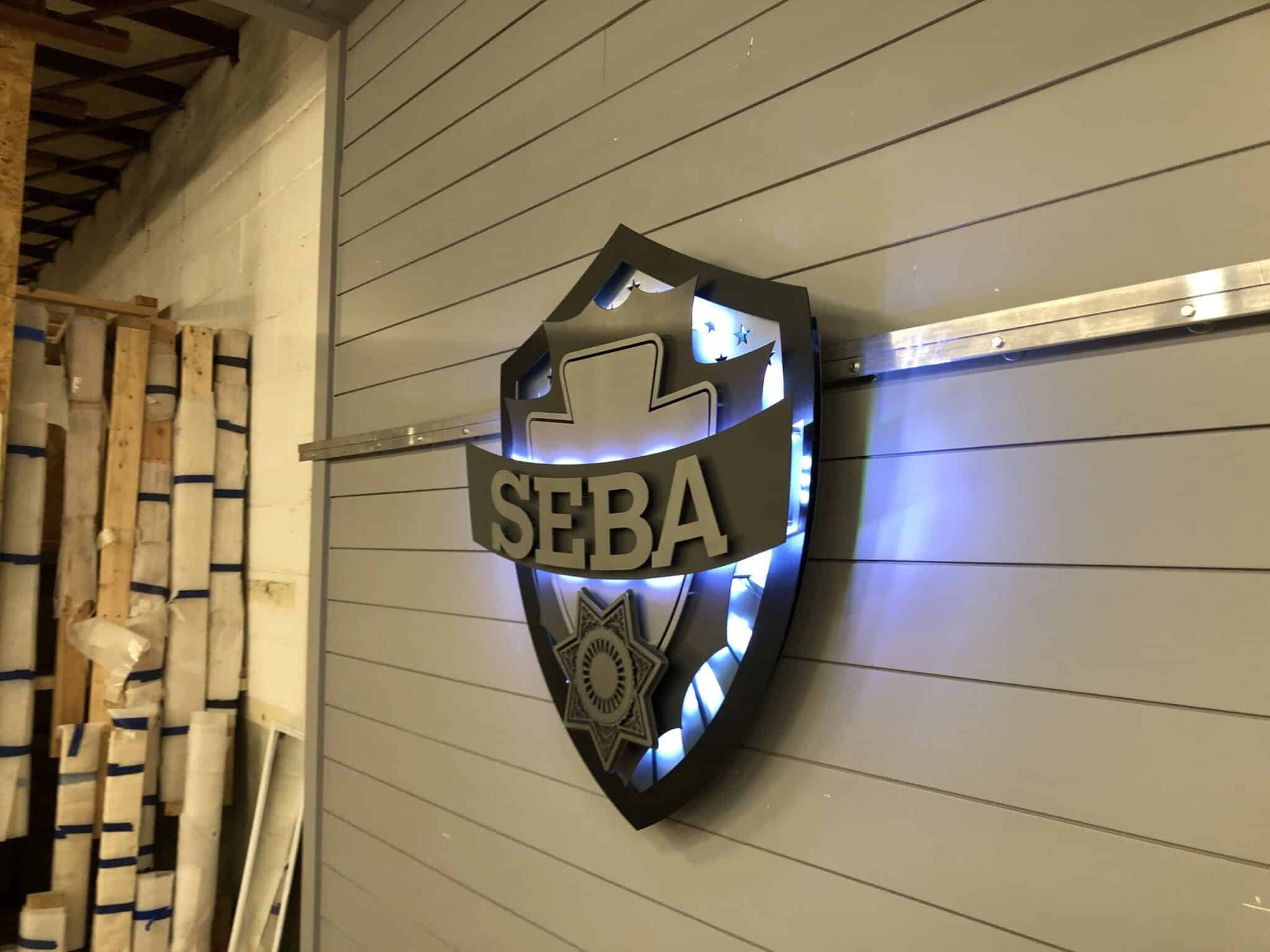
A halo-lit logo we produced for SEBA — solid metal by day, a clean glow by night.

Installation and Power Requirements

The most common question we get is: “Does this need to be hardwired?” Usually, yes — a backlit metal logo sign is typically wired into a nearby junction box through a low-voltage transformer, so it is best to involve an electrician for the final connection. The sign itself we ship with a mounting template and a wiring diagram; the metalwork and LEDs are done, the building tie-in is the only field electrical work.

A practical tip from years of installs: decide where the power will come from before you finalize the logo’s position on the wall. We have seen beautiful signs end up two feet off-center because the only available junction box dictated placement after the fact. Plan the power drop first, then center the logo. Our installation services team can coordinate this, or we will hand your electrician everything they need.

Choosing the Right Metal and Finish

For most backlit logo signs we recommend powder-coated aluminum: it is lightweight (which matters when it is standing off a wall), it will not rust, and powder coating gives a durable, even color. For a more premium look, brushed stainless steel pairs beautifully with a cool-white halo. If you want warmth, brass and copper develop a rich tone that a warm LED only enhances.

Whatever the metal, the finish should match the lighting style. A glossy face can create hot spots with face-lit signs, so we often specify a satin finish. If you are weighing materials generally, our comparison of aluminum vs. stainless steel is a good starting point.

Brushed metal halo-lit institutional logo sign mounted in a lobby
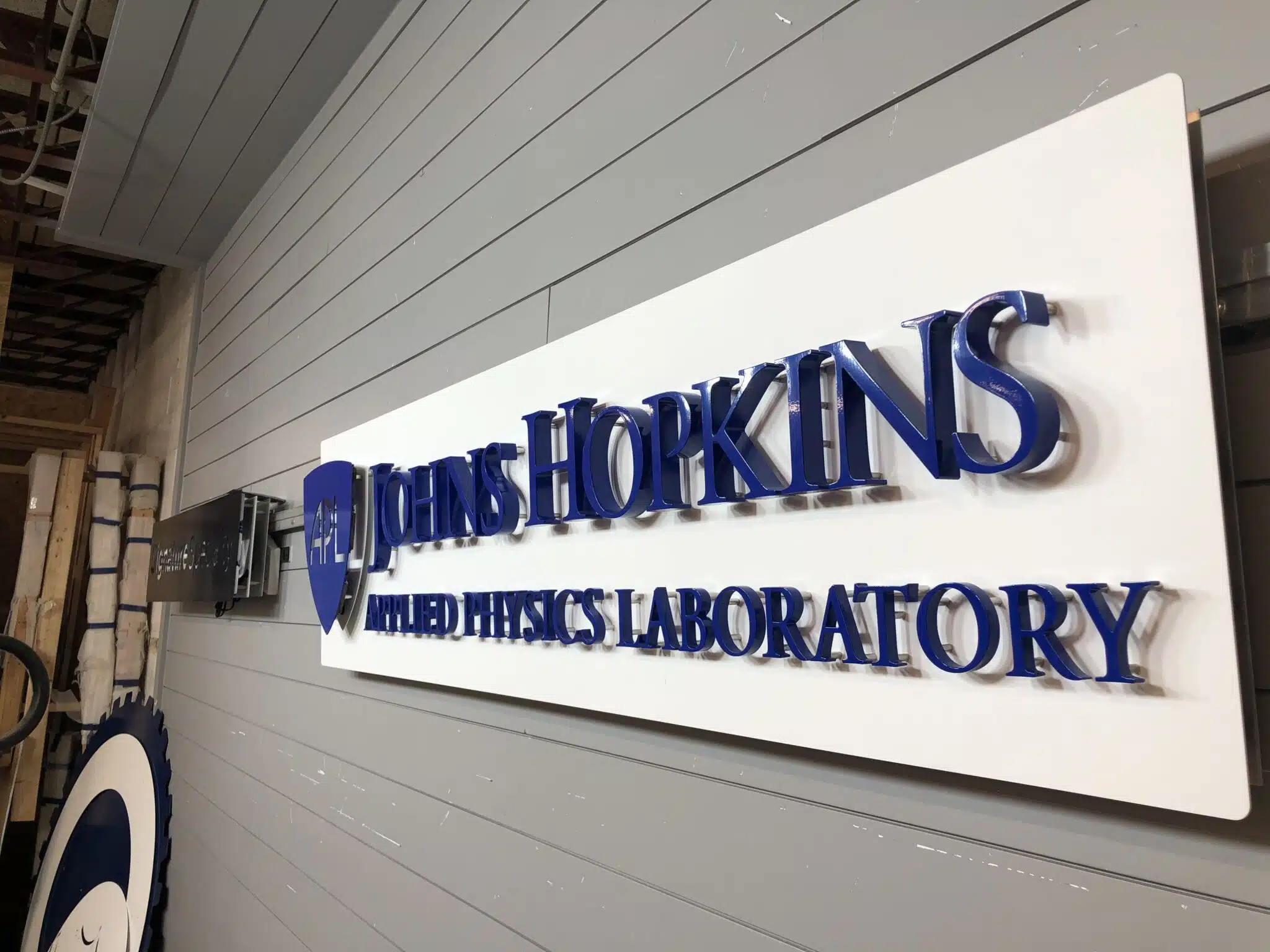
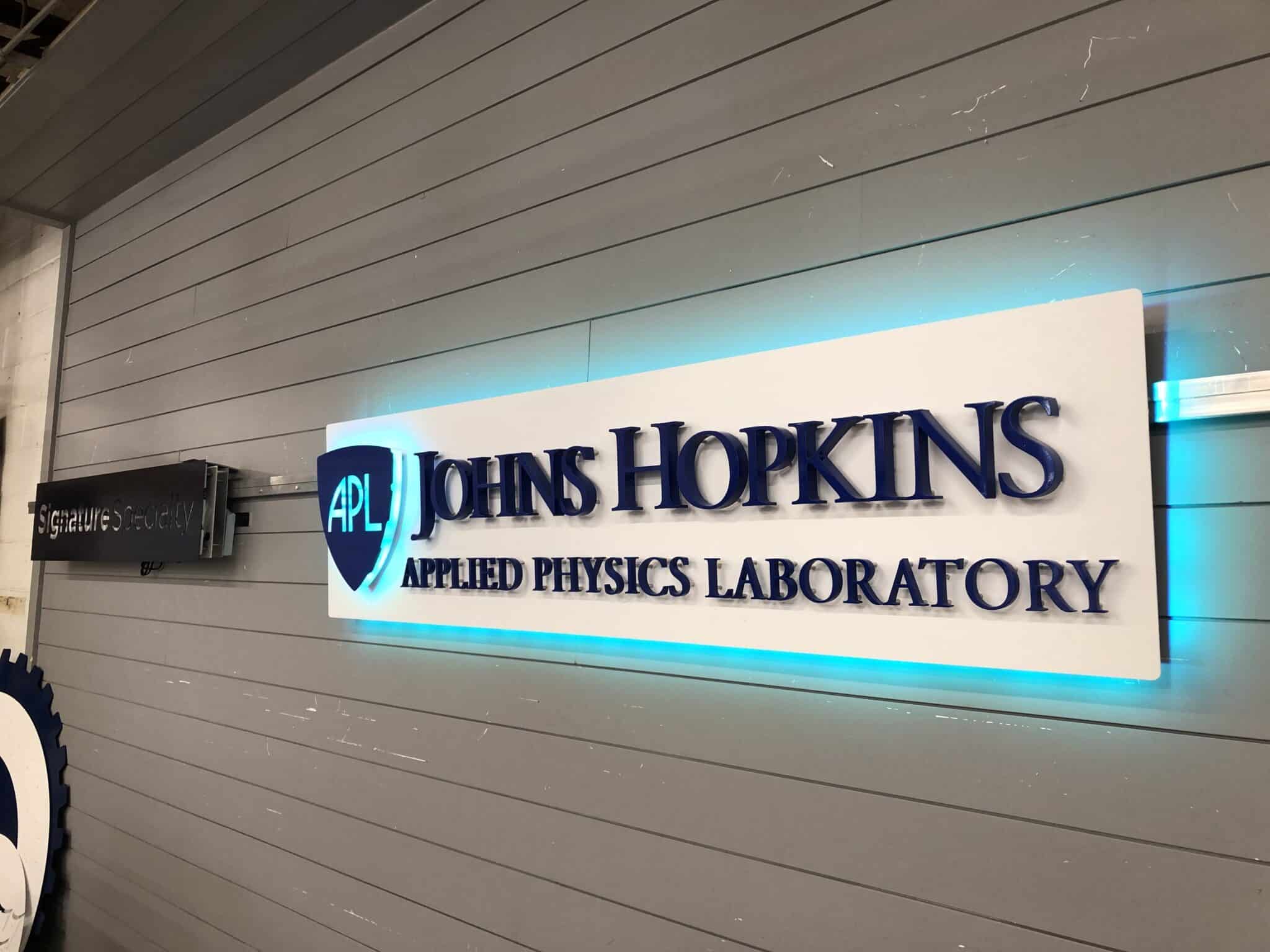
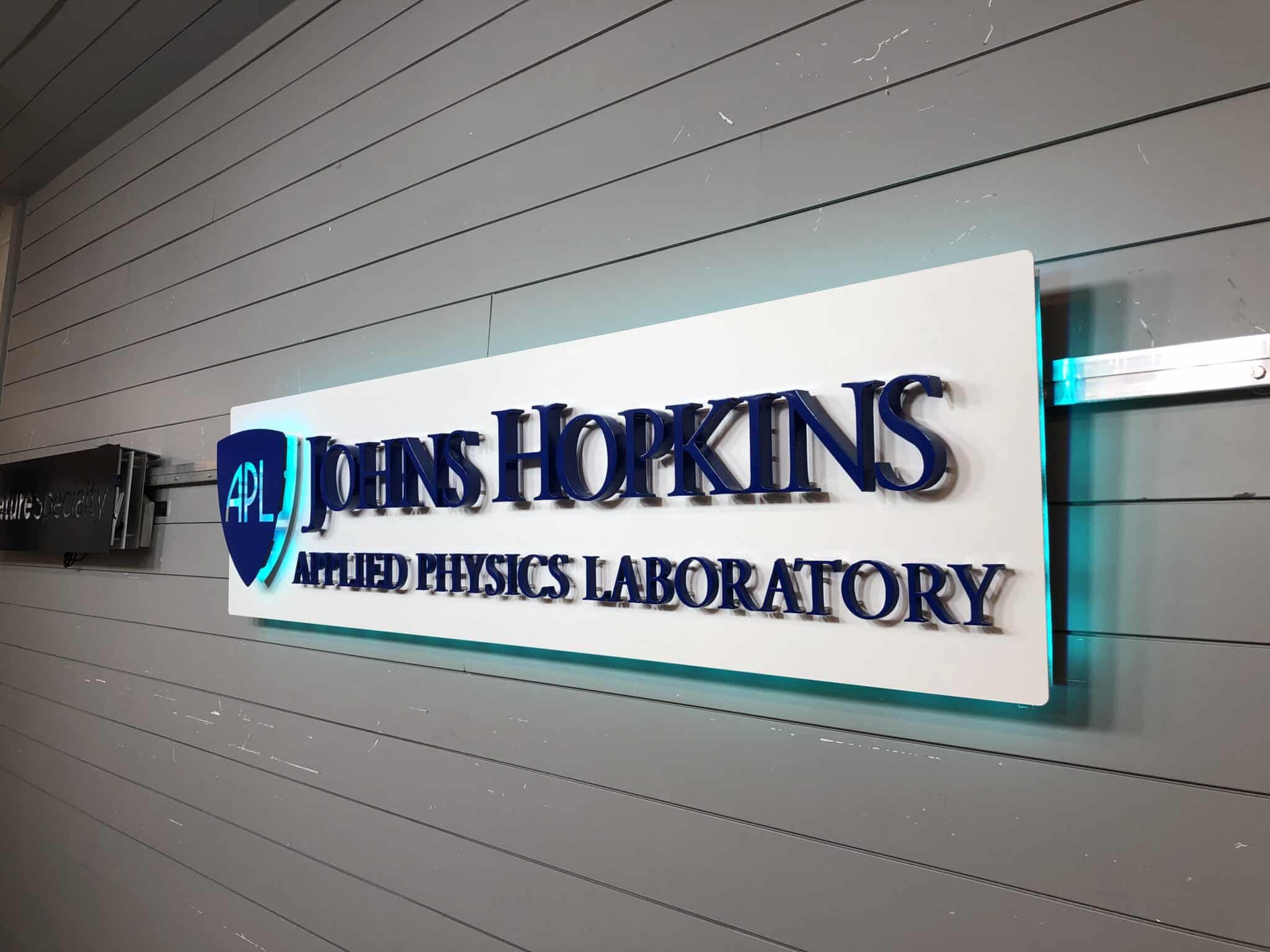
A halo-lit logo we fabricated for Johns Hopkins APL — brushed metal with a crisp, even glow.

What Backlit Metal Logo Signs Cost

Pricing depends on size, metal, finish, and complexity, but as a rough guide, a backlit metal logo sign for an interior lobby typically starts in the low four figures and scales up with size and detail. The biggest cost drivers are the overall dimensions, whether the logo has fine detail that is harder to hollow out for halo lighting, and the finish you choose. For context on general sign budgets, see our overview of business signage costs.

Because every backlit logo is built around your specific artwork, the most accurate way to get a number is a quick quote. Send us your logo and the wall dimensions, and we will scope it precisely.

Get a Free Backlit Sign Quote

Frequently Asked Questions

What is the difference between a backlit sign and a halo-lit sign?

Halo-lit is a specific type of backlit sign. “Backlit” broadly means the light comes from behind or within the sign; halo-lit specifically means the LEDs sit behind solid metal letters so the glow spills onto the wall, creating a halo. Face-lit is another backlit style where the light shines through a translucent front face.

Do backlit metal logo signs work outdoors?

Yes. We build them with weather-rated LEDs, sealed connections, and powder-coated aluminum or stainless steel so they hold up to sun, rain, and snow. Face-lit styles are especially popular for exteriors because they read from a distance. Just make sure the transformer and wiring are rated for outdoor use.

How long do the LEDs last?

Quality LED modules are rated for tens of thousands of hours — commonly 50,000+ — which is many years of daily use. They are also low-voltage and energy-efficient, so running a backlit logo overnight costs very little. When an LED module eventually needs service, it can typically be replaced without rebuilding the sign.

Can you backlight any logo?

Almost any logo can be adapted, but very thin strokes or tiny details are harder to halo-light cleanly because each element needs enough interior volume to house LEDs and throw a glow. During design we will flag any elements that should be simplified or thickened, and often suggest a hybrid — solid metal for fine detail, halo lighting for the main mark.

How is a backlit metal logo sign installed?

It mounts on standoffs or a pattern of studs that hold it off the wall, and it ties into building power through a low-voltage transformer. We provide a mounting template and wiring diagram; a licensed electrician handles the final power connection, or our team can manage the full installation.

Ready to see your logo glow? Explore more examples in our project gallery, learn about our lighting services, or start a conversation about your space. Whether you are a restaurant in downtown Frederick or an office tower in the DC metro area, we ship custom metal signs nationwide.

Start Your Custom Sign Project

Filed Under: Custom Signs

July 8, 2026 by Luke Markey

If you want an outdoor sign that still looks sharp a decade from now, the short answer is this: choose powder-coated aluminum for the body, use a UV-stable finish, and mount it with proper standoffs and stainless hardware so water can drain and air can circulate. That combination survives sun, rain, snow, and salt better than almost anything else at a reasonable price. Everything else in this guide is about the details that turn a good custom outdoor metal sign into one that protects your brand for 15 to 20 years.

By Luke Markey, Co-Founder of ShieldCo Art — custom metal sign specialists based in Frederick, Maryland, with signs installed in 46 of 50 US states.

Exterior halo-lit custom outdoor metal sign for PML Construction mounted on a building facade
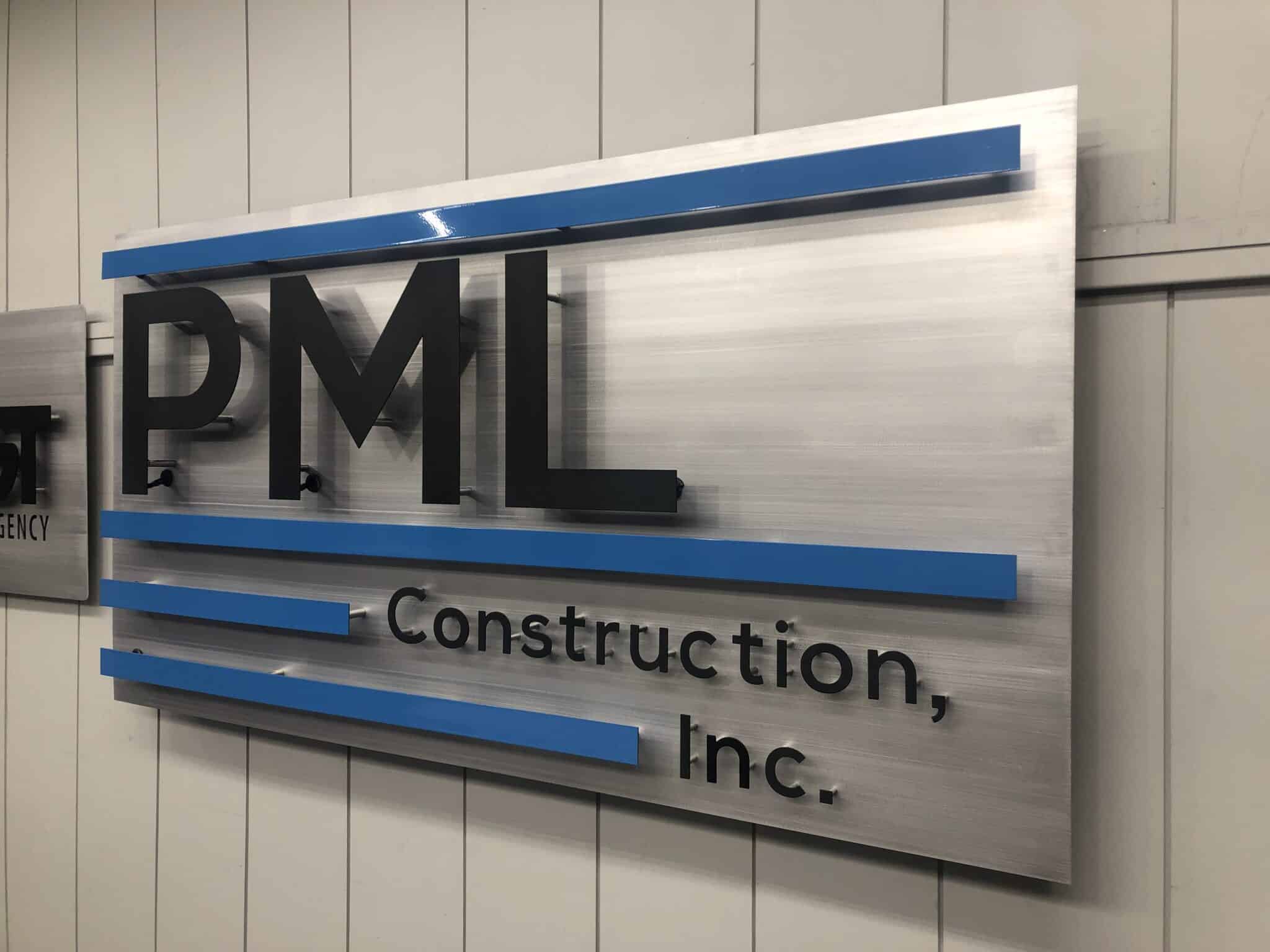
Halo-lit exterior sign we fabricated for PML Construction — powder-coated aluminum built for years of weather exposure.

An outdoor sign has a harder job than almost any other piece of your branding. It faces direct sun, freeze-thaw cycles, wind-driven rain, road salt, and pollution — sometimes all in the same week here in the Mid-Atlantic. We’ve fabricated exterior signage for businesses from downtown Frederick to office parks across the country, and the projects that still look great years later almost always come down to three decisions: the metal, the finish, and how it’s mounted. Get those right and an outdoor sign becomes one of the best long-term marketing investments a business can make.

Which Metal Holds Up Best Outdoors?

The single most important choice for any outdoor metal sign is the base material. Each metal behaves differently once it’s exposed to the elements, and the “best” one depends on the look you want and the environment it lives in.

  • Aluminum — Our default recommendation for most outdoor business signs. It never rusts, it’s lightweight (which simplifies mounting on facades), and it takes powder coating beautifully. For the vast majority of exterior projects, powder-coated aluminum is the sweet spot of durability, appearance, and cost.
  • Stainless steel — Premium, heavy, and extremely corrosion-resistant. Great for a modern, high-end look and coastal environments, but it costs more and weighs more, which affects both fabrication and installation.
  • Mild (carbon) steel — Strong and economical, but it will rust if the coating is ever breached. We only use it outdoors when it’s fully powder coated, or when a client specifically wants a controlled rusted/patina look.
  • Copper and brass — Beautiful living finishes that patina over time. Perfect for historic buildings and luxury brands, but they’re a design statement rather than a low-maintenance choice.

If you’re weighing the two most common options head-to-head, we go deep on that decision in our guide to aluminum vs. stainless steel signs. For a broader look at picking the right substrate, this material guide is a good starting point. You can also see the full range of options on our custom metal signs page.

A field note on aluminum thickness

One thing we’ve learned from years of installs: gauge matters more than people expect. A thin aluminum panel can “oil-can” (visibly ripple) on a hot facade as it expands, and larger dimensional letters need enough material to stay flat and rigid over time. For sizeable exterior signs we typically spec heavier-gauge aluminum or add structural returns — a small material cost that prevents a warped, wavy sign two summers down the road.

Finishes That Survive the Sun

The finish is what actually stands between your metal and the weather, and it’s also where the most expensive mistakes happen. A gorgeous sign with a poor finish can chalk, fade, or peel within a couple of seasons.

Brushed metal halo-lit exterior logo sign for Johns Hopkins APL on a corporate building
Corporate exterior signage for Johns Hopkins APL — a clean finish engineered to hold its color and shine outdoors.

Here’s how the common outdoor finishes stack up:

  • Powder coating — Our go-to for durability. It’s an electrostatically applied, oven-cured finish that’s far tougher than spray paint, resists chipping and UV fading, and comes in almost any color. We cover why in the benefits of powder-coated business signs. It’s also worth understanding how powder coating compares to other painted finishes.
  • Brushed and polished metal — Timeless for stainless steel and aluminum. We recommend a clear protective coat outdoors to slow oxidation and water spotting.
  • Anodized aluminum — A durable, color-integrated finish that resists fading well, popular for a sleek architectural look.
  • Natural patina — For copper, brass, or intentionally rusted steel, the “finish” is the aging itself. It’s low-maintenance in the sense that it’s supposed to change, but it’s not the right call if you want your logo colors to stay exact.

For color accuracy, one practical tip: powder-coat colors can shift slightly under bright sun versus how they look in the shop. When brand color is critical, we match to your exact spec and, when needed, produce a physical sample before running the full sign. Our in-house powder coating makes that kind of quality control possible, and it’s a big part of why we keep the whole fabrication process under one roof.

Outdoor Metal Sign Materials at a Glance

This comparison table sums up how the main options perform where it counts for exterior use:

Material Corrosion Resistance Typical Lifespan (Outdoor) Relative Cost Best For
Powder-coated aluminum Excellent (won’t rust) 15–20+ years $$ Most business signs
Stainless steel Excellent 20+ years $$$$ Premium & coastal
Powder-coated steel Good (if coating intact) 10–15 years $$ Large structural signs
Copper / brass Excellent (patinas) Decades (finish evolves) $$$$ Historic & luxury brands
Bare / rusted steel Low (intentional) Varies $ Rustic aesthetic only
General guidance from our fabrication experience — actual lifespan depends on climate, finish quality, and maintenance.
Get a Free Quote on Your Outdoor Sign

Mounting and Installation: Where Longevity Is Won or Lost

You can build a perfect sign and still cut its lifespan in half with poor installation. Water intrusion and trapped moisture are the top killers of outdoor signage, so how a sign attaches to the wall matters as much as what it’s made of.

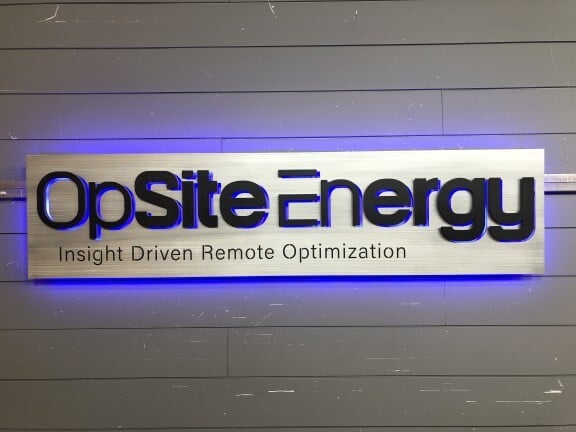
Illuminated exterior custom outdoor metal sign for OpSite Energy mounted on an office building
Backlit exterior sign for OpSite Energy — sealed electrical components and proper standoffs keep weather out.

A few things we insist on for exterior installs:

  • Stainless steel hardware. Never mount an outdoor sign with fasteners that can rust and bleed streaks down your building. Stainless (or otherwise corrosion-resistant) hardware is non-negotiable.
  • Standoffs and drainage. Flush-mounting a sign flat against a wall traps water behind it. Spacers and weep points let moisture escape and air circulate, which dramatically slows corrosion.
  • Sealed lighting. For illuminated signs, the LEDs, transformers, and wiring have to be properly rated and sealed for outdoor use. A tiny gap where water reaches the electrical is a common and avoidable failure point.
  • Wall type awareness. Brick, EIFS, metal panel, and stone all need different anchoring strategies. Matching the mount to the substrate is the difference between a sign that stays put and one that loosens over time.

If installation isn’t in your wheelhouse, our installation services team handles it end to end, and every sign ships protected thanks to our careful packing and shipping process — which matters when your sign is traveling from Maryland to a job site across the country.

How Long Should an Outdoor Metal Sign Last?

A well-built, powder-coated aluminum exterior sign should comfortably last 15 to 20 years or more with minimal upkeep. We’ve seen ShieldCo signs holding their color and finish long after installation because the fundamentals were right from the start. Maintenance is refreshingly simple: an occasional wash with mild soap and water to remove pollution and grime is usually all it takes. For a deeper dive, we wrote a full guide on protecting and maintaining outdoor metal sign fixtures.

Whether you run a restaurant in downtown Frederick, a medical office in the DC metro area, or a distribution center on the other side of the country, the math is the same: a durable exterior sign spread over two decades is one of the lowest cost-per-impression advertisements you’ll ever buy. That’s the case we make in why a premium sign boosts your bottom line.

Frequently Asked Questions

What is the best metal for outdoor business signs?

For most businesses, powder-coated aluminum is the best all-around choice. It never rusts, it’s lightweight and easy to mount, and the powder-coated finish resists UV fading and chipping for well over a decade. Stainless steel is an excellent premium alternative, especially in coastal or high-corrosion environments, but it costs and weighs more.

Do outdoor metal signs fade in the sun?

A quality finish resists fading for many years. Powder coating and anodized finishes hold their color far better than standard spray paint, which can chalk and fade within a couple of seasons. Choosing UV-stable colors and a properly cured finish is the key to keeping your brand colors accurate over time.

How much does a custom outdoor metal sign cost?

Cost depends on size, material, finish, and whether the sign is illuminated. Small exterior logo signs start in the hundreds, while large dimensional or lit signs run into the thousands. Because outdoor signs last 15–20+ years, the cost per year of service is very low. See our overview of business signage costs, or request a free quote for exact pricing.

Can outdoor metal signs be illuminated?

Yes. Backlit (halo-lit) and face-lit LED signs work beautifully outdoors as long as the lighting components are rated and sealed for exterior use. Proper weatherproofing of the LEDs and wiring is essential — it’s one of the most common places a cheaply made outdoor sign fails.

Do you ship outdoor signs nationwide?

We do. ShieldCo is based in Frederick, Maryland, and we’ve installed signs in 46 of 50 US states. Every sign is fabricated in-house and carefully packaged for safe cross-country shipping, with optional professional installation available.

Ready to design an exterior sign built to last? Explore our project gallery and case studies for inspiration, or reach out and we’ll help you spec the right materials and finish for your environment.

Start Your Custom Outdoor Sign

Filed Under: Custom Signs

June 17, 2026 by Luke Markey

The short answer: A great custom restaurant sign is a backlit or dimensional metal logo — typically powder-coated aluminum or stainless steel — sized to your facade or interior wall, designed to be legible from across the parking lot or street, and built to survive years of weather, kitchen humidity, and salt air. Expect to spend between $1,800 and $8,000 for a serious exterior or feature interior piece, plus install. The right sign tells customers what your restaurant is about before they read the menu.

By Luke Markey, Co-Founder of ShieldCo Art — custom metal sign specialists based in Frederick, Maryland, with signs installed in 46 of 50 US states.

Restaurants live and die on first impressions. The sign on your facade is the single most-photographed, most-Instagrammed, most-remembered element of your brand — and it gets to do its job 24 hours a day, in every weather, for a decade or more. After fabricating hundreds of custom restaurant signs for taprooms, fine dining rooms, neighborhood grills, and brewpubs from Maryland to Montana, we’ve learned that the restaurants that invest in proper metal signage almost universally outperform their neighbors on foot-traffic conversion. This guide breaks down everything restaurant owners and operators should know before commissioning a custom metal sign — materials, sizes, lighting, costs, permits, and the small details that separate a forgettable storefront from a destination.

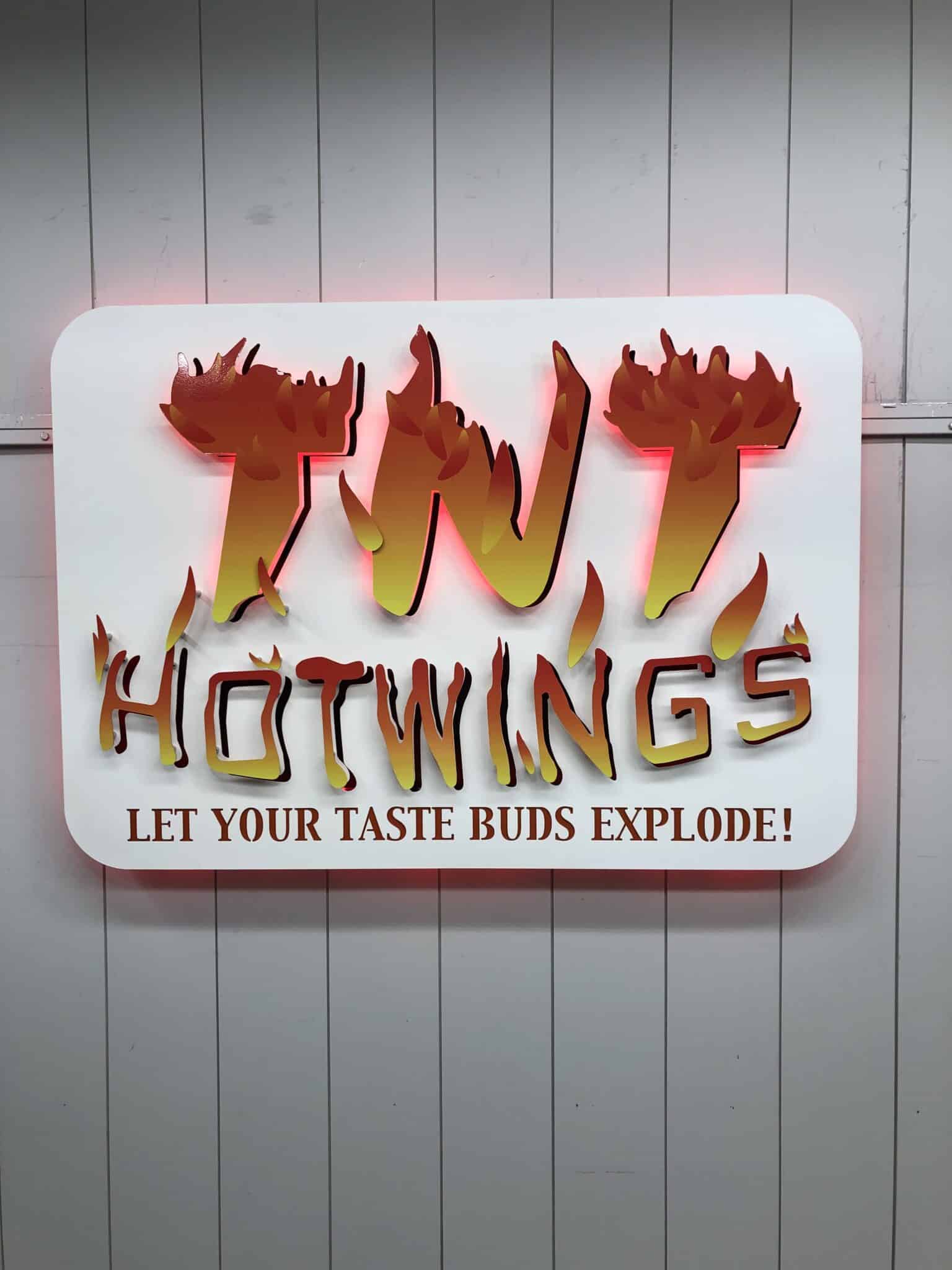
Backlit metal custom restaurant sign for TNT Hot Wings mounted on storefront exterior
Exterior backlit logo we fabricated for TNT Hot Wings — sized for street-side legibility and built to handle the heat and grease vapor of a working kitchen wall.

Why Restaurants Choose Custom Metal Signs Over Other Materials

Most restaurants we work with start the conversation looking at vinyl, acrylic, or wood. There’s nothing wrong with those materials in isolation — they’re cheaper up front, and for short-term concepts (pop-ups, food trucks, seasonal patios) they can be the right call. But for restaurants planning to stay in business more than three years, custom metal signs win on every long-term metric:

  • Longevity: A powder-coated aluminum sign typically lasts 15–25 years outdoors with no maintenance beyond an occasional wipe-down. Vinyl fades and peels in 3–5; wood warps and rots in 5–10.
  • Perceived value: Metal signals investment, permanence, and quality. Diners read those cues unconsciously before they read a menu.
  • Light interaction: Metal is the only practical material for halo lighting, push-through lighting, and most modern illuminated sign styles.
  • Repair-ability: A metal sign that gets a scratch or a bent corner can be touched up. A scratched acrylic sign or torn vinyl is usually a full replacement.

If you want a deeper material comparison, our post on aluminum vs. stainless steel for metal signs walks through the trade-offs in detail.

The Most Common Restaurant Sign Types (and When to Use Each)

Every restaurant we quote falls into one of a few sign archetypes. Picking the right archetype before you start designing saves weeks of revisions and thousands of dollars.

1. Exterior Building-Mount Logo Sign

The classic over-the-door logo. Almost always dimensional metal letters or a flat panel with the brand mark. This is what people photograph and what shows up in Google Street View for the next ten years. Build it well.

2. Backlit / Halo-Lit Logo Sign

A flat or shallow dimensional metal logo with LED lighting behind it, so the wall behind the sign glows in the shape of the logo. This is the most-requested style in our restaurant work for the last three years — it photographs beautifully at night and reads as upscale without screaming “Las Vegas.” See our illuminated sign options for more.

3. Blade Sign (Projecting Sign)

Mounted perpendicular to the building so foot-traffic walking along the sidewalk sees the sign before they reach your door. Critical for downtown locations, walkable retail districts, and any restaurant where most customers arrive on foot.

4. Interior Feature Wall / Lobby Sign

Often a 3D metal logo on the host stand wall, behind the bar, or in a private dining room. Becomes the de facto Instagram backdrop. We’ve fabricated dozens of these — they’re frequently the single highest-ROI sign in a restaurant because diners photograph them and tag the restaurant for free.

5. Brewery Tap List / Menu Board (Cut from Metal)

Brewpubs and taprooms increasingly want their tap lists laser-cut into metal panels with chalkboard or magnetic inserts. Looks better than a vinyl board, doubles as decor when the bar is closed.

Materials: What Restaurants Should Actually Buy

In our experience, 90% of restaurant signs should be one of three materials. Anything else is usually a designer’s vanity choice or a misread of the environment.

Material Best For Typical Lifespan Relative Cost
Powder-coated aluminum Most exterior signs, especially coastal or humid climates 15–25 years $$
Stainless steel Upscale concepts, exposed steel architecture, raw brushed look 25+ years $$$
Rustic / weathered steel Brewpubs, BBQ joints, farm-to-table concepts 15+ years (patina deepens) $$
Copper or brass Fine dining, historic buildings, statement interior pieces 30+ years $$$$

A practical rule we share with restaurant clients: if your sign will live on a south-facing wall in full sun, or anywhere within five miles of salt water, powder-coated aluminum is the safe answer. If you want the sign to look like a working piece of industrial equipment — brewpubs and craft kitchens especially — weathered or distressed steel ages beautifully and looks better at year five than year one.

Lighting: Halo, Face-Lit, or None?

Most restaurants we quote ask for lighting on at least their primary exterior sign. The three options are simpler than the proposals make them sound:

  • Halo lighting (back-lit): LEDs behind the sign throw a soft glow onto the wall around the logo. The logo itself stays dark and dimensional. Looks expensive, photographs beautifully, doesn’t blast light into neighboring windows. Our most-requested style.
  • Face lighting (front-lit / push-through): The logo itself glows. Either the metal is cut out and acrylic shines through, or letters are lit from the front. Higher visibility for drive-by traffic; less subtle.
  • Unlit: Perfectly valid for daytime-only concepts (breakfast spots, coffee houses) or restaurants in well-lit districts. Saves significant cost and complexity.

For a deeper dive on lighting choices specifically, see our guide on LED benefits in custom sign design and our lighted business signs overview.

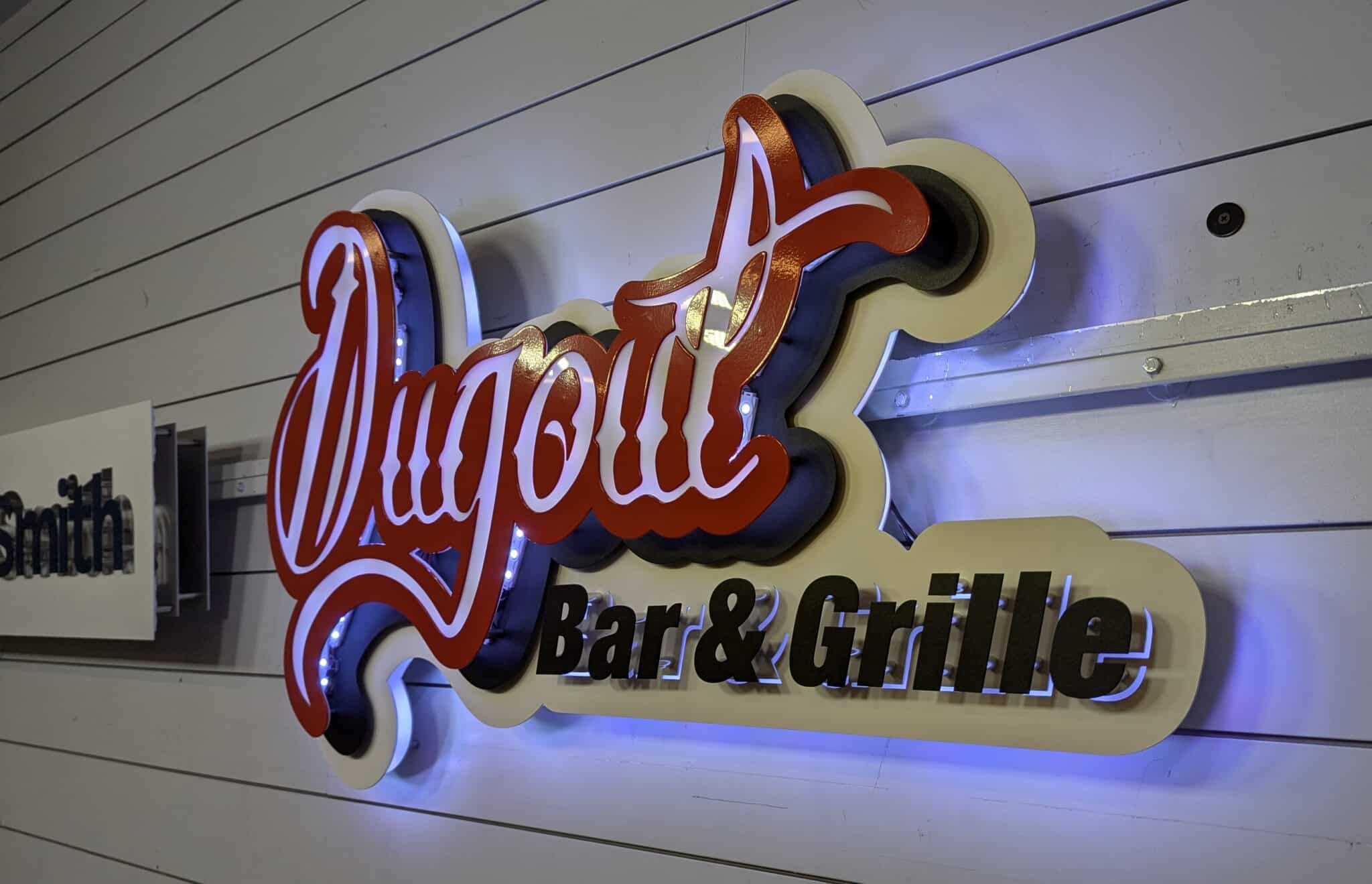
Custom metal restaurant sign installed at Dugout Bar and Grille exterior storefront
Exterior storefront sign for Dugout Bar and Grille — a no-nonsense, high-visibility build sized for street-side legibility.

How Much Custom Restaurant Signs Cost

Costs depend on size, material, lighting, and finish, but here are realistic ranges from real restaurant quotes we’ve written this year:

  • Interior feature wall logo, unlit, 24–36″ wide: $1,200–$2,500
  • Interior feature wall logo, halo-lit, 36–48″ wide: $2,500–$4,500
  • Exterior building-mount logo, unlit, 48″ wide: $2,800–$5,000
  • Exterior building-mount halo-lit logo, 60–72″ wide: $4,500–$8,500
  • Blade / projecting sign with bracket, 24–36″ wide: $1,800–$4,000
  • Custom tap list / menu board, 36–48″ wide: $1,400–$3,200

Installation typically runs an additional $400–$1,500 for interior pieces and $1,000–$3,500 for exterior pieces depending on access, mounting surface, and whether electrical hookup is required. For a fuller breakdown across all sign types, see our business signage cost guide.

One cost-saving note from years of restaurant work: many restaurant owners over-spec lighting and under-spec size. A 4-foot halo-lit sign reads beautifully from 30 feet but disappears from the road at 200 feet. If you have a parking lot, build bigger and consider face-lighting; if you have a sidewalk, build smaller and halo-light it.

Get a Free Restaurant Sign Quote

Permits, Codes, and Things That Will Slow You Down

Sign permits are the single most common cause of restaurant sign delays we see. A few realities we’ve learned to communicate up front:

  • Most municipalities cap sign square footage based on building frontage. Check before you fall in love with a design.
  • Historic districts — common in older downtowns like Frederick, Maryland, or any pre-war town center — often require review by a historic preservation board, which can add 6–12 weeks. Whether you’re a brewpub in Old Town Alexandria or a bistro in downtown DC, ask about historic-district overlays before you sign a lease.
  • Shopping center landlords usually have their own sign criteria that supersede city code. Get the sign criteria document before you start designing.
  • Internally-illuminated signs require an electrician on the install, which means inspection. Build that into your timeline.

We’ve fabricated and shipped restaurant signs to 46 of 50 US states from our Frederick, MD shop. The work that goes well almost always starts with a landlord or city sign-criteria PDF in hand on day one. The work that goes badly almost always starts with “We’ll figure out the permit later.”

Interior Signs: The Most Underrated ROI in Restaurant Branding

If we could only give one piece of advice to a new restaurant owner about signage, it would be this: budget for an interior feature sign before you budget for a fancier exterior one.

Here’s why. The exterior sign brings someone in. The interior sign — a 3D metal logo behind the bar, a halo-lit wordmark behind the host stand, a laser-cut tap list panel — is what gets photographed, tagged, and posted to Instagram by every customer for the next decade. We’ve had brewpub clients tell us their interior feature wall sign generated more attributable foot traffic, via social photo tagging, than any paid ad they ran in year one. That’s why interior signage deserves a serious slice of any restaurant branding budget.

Backlit metal bar sign installed indoors with warm halo glow against textured wall
An interior backlit bar sign we built — the halo glow turns a feature wall into the room’s most-photographed spot.

The ShieldCo Process for Restaurant Signs

Every restaurant project we run goes through the same five phases. Knowing what each looks like helps you plan a realistic install date:

  1. Design + 3D mockup — We translate your logo into a fabricator-ready vector, propose materials and mounting, and produce a photo-realistic 3D mockup on your actual building or interior wall. (3–7 business days.)
  2. Quote + approval — Detailed spec, sample finishes if requested, signed approval.
  3. Fabrication — Laser cutting, welding, finishing, and powder coating in our Frederick, MD shop. (Typically 2–4 weeks.)
  4. Packing + shipping — Custom crating and free freight in the continental US. See our packing process.
  5. Installation — Either your local installer with our template, or ShieldCo’s national install network.

For a complete walkthrough of how we approach every job, see our process page.

Start Your Restaurant Sign Project

Frequently Asked Questions

How long does a custom restaurant sign take to make?

From approved design to delivered sign, plan on 4–6 weeks for a typical exterior or interior metal sign, plus install time. Halo-lit and complex multi-piece signs run 5–8 weeks. We’ve turned rush projects in 2–3 weeks when timing demanded it, but standard lead times produce better work.

Do I need a permit for a restaurant sign?

For any exterior sign, almost always yes — both from your municipality and (if you’re in a shopping center or mixed-use building) your landlord. Interior signs typically don’t require a permit. Always check before you order; we can supply engineering drawings and material specs to make the permit process smoother.

Can I get a metal sign that matches my exact brand colors?

Yes — we color-match any logo to a Pantone, RAL, or paint code via powder coating, and we can also produce raw brushed, mill, weathered, or patinaed finishes that don’t use paint at all. For multi-color logos, each color is masked and powder-coated separately.

How do brewery and taproom signs differ from regular restaurant signs?

Brewery clients almost always want a “working metal” aesthetic — distressed steel, weathered patinas, exposed welds, industrial finishes. We also fabricate a lot more laser-cut menu and tap-list panels for breweries than for full-service restaurants. The exterior building-mount sign principles are the same; the styling is different.

Will my metal sign hold up in coastal humidity / salt air?

Powder-coated marine-grade aluminum is the answer for coastal restaurants. Avoid raw steel or untreated copper within 5 miles of saltwater unless you specifically want aggressive patina. We’ve shipped signs to coastal restaurants from Maine to the Florida Keys with no field failures when the right material and coating are spec’d.

Ready to Build Your Restaurant’s Sign?

Whether you’re opening a new concept in downtown Frederick, refreshing an established neighborhood spot in the DC metro, or rolling out signage across a multi-location brewery footprint, we’d love to quote your project. Send us your logo and the dimensions of the wall you’re working with, and we’ll come back with a 3D mockup and an honest range of materials and finishes that fit your vision and budget. See our project gallery for more restaurant work, or read about ShieldCo’s story.

Get Your Free Restaurant Sign Quote

Filed Under: Custom Signs

May 5, 2026 by Luke Markey

Custom copper signs are a premium signage option that combine warm, natural color, exceptional durability, and a living finish that develops a richer patina over time — making them a top choice for restaurants, hotels, historic buildings, law firms, and luxury brands that want their signage to feel timeless, not generic. Copper costs more than aluminum or steel, but for the right project it pays for itself in brand perception, longevity, and a finish no other metal can replicate.

By Luke Markey, Co-Founder of ShieldCo Art — custom metal sign specialists based in Frederick, Maryland, with signs installed in 46 of 50 US states.

If you’re a business owner researching custom metal signs and you keep coming back to copper, you’re not alone. Searches for “copper signs” and “custom copper signs” have grown steadily over the last year, and the inquiries we get for copper at our Frederick, Maryland fabrication shop almost always come from the same kinds of clients: chef-driven restaurants, boutique hotels, law firms in historic buildings, distillers, jewelers, and architects designing for clients who want signage that looks like it belongs in the building, not stuck onto it.

This guide walks through what makes copper different from other sign metals, the finish options you can specify, the trade-offs to be aware of, what copper actually costs, and the kinds of projects where it absolutely earns its place.

Warm-toned backlit metal logo sign for The Twisted Oar restaurant, illuminated at night
A backlit dimensional sign we fabricated for The Twisted Oar — the kind of warm, glowing presentation that pairs beautifully with copper finishes.

Why Choose Copper for a Business Sign?

Most custom metal business signs are made from aluminum or steel because both are affordable, weather well, and accept paint and powder coat finishes cleanly. Copper sits in a different category. It’s a statement metal — chosen specifically because of how it looks, how it ages, and what it signals about a brand.

Here are the reasons clients ask for custom copper signs instead of a more conventional finish:

  • Warm, natural color. Copper has a soft pinkish-orange glow that no painted finish can fake. Even high-end metallic powder coats look flat next to real copper in daylight.
  • It develops character over time. Unlike aluminum or steel, raw copper changes as it ages — first to a deeper bronze, then eventually to the famous green-blue patina you see on the Statue of Liberty. You can lock the finish at any stage with a clear coat.
  • Naturally corrosion-resistant. Copper doesn’t rust like steel does. The “patina” people sometimes worry about is actually the metal protecting itself — a stable oxide layer that shields the copper underneath.
  • Sophisticated brand association. Copper reads as craft, history, and premium. It’s why distilleries, whiskey bars, jewelers, hotels, and high-end restaurants gravitate to it.
  • It pairs with almost anything architecturally. Copper looks at home against brick, stone, dark wood, brass hardware, and modern matte-black storefronts equally well.

In our experience fabricating signage for clients across the Mid-Atlantic and beyond, copper is rarely the cheapest option on the table — but it’s the option clients regret not choosing more often than any other.

Copper Finish Options: From Polished to Aged

One of the underappreciated things about copper is how many finishes you can specify from the same base material. The metal itself is the same; what changes is how it’s prepared and what’s done to lock the appearance in place.

Polished Copper

Bright, mirror-bright, almost rose-gold in tone. This finish is dramatic but high-maintenance — without a clear coat, it will start to dull within weeks. Best for indoor lobby signs and protected interior installs where the finish can be controlled.

Brushed or Satin Copper

A directional grain similar to brushed stainless, but in copper’s warmer tone. Hides fingerprints and small scratches better than polished, and reads slightly more modern. A good middle ground for office and restaurant lobby applications.

Natural / “Living” Copper

Untreated copper that’s allowed to age naturally with the environment. Outdoor copper signs in this finish will start as a bright penny color, deepen to chocolate-brown over the first year or two, and slowly turn green over decades. Some clients love this — it makes the sign feel like part of the building over time. Others want the bright color preserved, which is where clear coats come in.

Aged or Patinated Copper

Rather than waiting years for nature to do the work, we can chemically accelerate the patina to land on a specific look — deep brown, antique green, mottled verdigris, or a custom blend. We then clear-coat to lock it. This is the fastest way to get the “established for 100 years” look on a sign that was made last month.

Aged Brass (Honorable Mention)

Closely related to copper and often confused for it, brass is a copper-zinc alloy that ages similarly but stays in a more golden-yellow range. We make plenty of custom brass signs for clients who want the warm metallic look but with a different color profile than copper. Aged brass in particular has been trending in restaurant and boutique hotel branding.

Halo-lit metal logo sign with soft backlight glow installed on an interior office wall
Halo lighting (this one for SEBA) is a popular pairing with copper — the warm light against the warm metal creates a depth that flat-mounted signs can’t match.

Copper vs Other Sign Metals: How Do They Compare?

If you’re trying to decide between copper and a more conventional sign material, the table below summarizes how it stacks up against the other metals we fabricate most often.

Material Cost Outdoor Lifespan Aging Behavior Best For
Copper $$$$ 50+ years Patinas naturally (bronze → green) Premium restaurants, hotels, historic buildings, jewelers
Brass $$$$ 50+ years Patinas to deeper gold/brown Boutique retail, luxury brands, classic interiors
Stainless Steel $$$ 50+ years Stable — no significant change Modern architecture, medical, financial, corporate
Powder-Coated Aluminum $$ 15-25 years Color fade after a decade outdoors Most general business and office signage
Powder-Coated Steel $$ 15-25 years (with proper coating) Will rust if coating is breached Industrial, rustic, and weighty installations

If durability and zero-maintenance are your only criteria, stainless steel is the most predictable premium metal — we wrote a deeper comparison in aluminum vs stainless steel. But stainless can read cold or clinical depending on the brand. Copper is the choice when you specifically want warmth, history, and a finish that tells a story.

Best Applications for Custom Copper Signs

Not every business is a fit for copper, and that’s fine — there’s no advantage to spending more on signage that doesn’t reinforce the brand. The applications where we see copper consistently shine:

  • Distilleries, breweries, and whiskey bars. Copper is already part of the visual language of the craft — it’s literally what the stills are made of. A copper restaurant sign here isn’t decoration, it’s a brand cue.
  • Boutique hotels and historic buildings. Copper looks like it’s always been there. On a 1920s brick facade or limestone storefront, it sits naturally in a way painted aluminum never quite does.
  • Jewelry and luxury retail. Customers expect material quality. A copper or brass sign on the storefront delivers a tactile preview of what’s inside.
  • Law firms and professional services in older buildings. Adds gravitas and continuity with traditional architecture.
  • Architectural signage for high-end residential and commercial buildings. Address plates, building names, donor walls, and lobby installations where the sign is part of the architectural finish package.

Conversely, we generally steer clients away from copper for high-volume commodity applications — chain retail, basic office park monument signs, school athletic signage — where powder-coated steel or 3D dimensional aluminum delivers a stronger result for the budget.

Get a Free Copper Sign Quote

What Does a Custom Copper Sign Cost?

Honest answer: more than aluminum, less than you might fear. Copper sheet itself is roughly 4-6x the per-square-foot cost of aluminum, and labor on copper is generally similar to other metals. For a typical custom logo sign in copper, expect to pay roughly:

  • Small interior copper logo sign (1-2 feet wide): $1,200 – $2,500
  • Medium copper exterior sign (3-5 feet wide): $3,500 – $7,000
  • Large copper monument or building sign (6+ feet): $8,000 – $20,000+
  • Add halo or backlit lighting: roughly $1,500 – $4,000 on top of the base sign cost depending on size

These are ballpark figures based on the projects we’ve quoted recently. Actual pricing depends on thickness, finish complexity (a custom three-tone patina is more labor than a brushed natural copper), mounting hardware, and whether you need professional installation. We’re happy to put a real number on your specific project — request a free quote with sketches or a logo file and we’ll come back with options at a few different price points.

For more on signage cost ranges generally, our older cost of business signage guide covers materials more broadly.

Premium dimensional metal building sign installed on the exterior of a Navy Federal Credit Union branch
Navy Federal Credit Union exterior sign — when an institutional brand wants to project permanence, premium metals like copper, brass, and stainless do that better than any painted alternative.

How Copper Holds Up Outdoors

This is the question we get most often, and the short answer is: copper outdoors is essentially a “set it and forget it” material — but only if you know what to expect.

Copper does not rust. The reddish dust people sometimes see on new copper is residual surface oxidation from manufacturing and washes off in the first rain. Over time, copper exposed to air and moisture forms a protective oxide layer (the patina) that protects the metal underneath rather than eating it away. This is why you see copper roofs and gutters that have been on buildings for over a century.

Where things go wrong: clients who expect bright penny copper to stay bright penny copper without any clear coat. That doesn’t happen outdoors. If you want to preserve a specific finish stage, we apply an automotive-grade clear coat that significantly slows aging. If you want the natural patina journey, we can leave it raw and let the building’s environment do the work.

Copper also handles UV, salt spray, freeze-thaw cycles, and temperature swings better than almost any sign material. We’ve shipped copper signs to coastal Florida and high-altitude Colorado and they’re holding up fine in both.

Lighting Options for Copper Signs

Copper takes light beautifully. The two pairings we see most often:

  • Halo lighting: LEDs behind the sign throw a glow onto the wall, silhouetting the copper. The warm copper edge against the soft halo is striking, especially at dusk. See more on our illuminated signs page.
  • External floods: Warm 2700K LED ground or wall floods aimed at the copper bring out the natural color at night without changing the daytime look. Less expensive than integrated lighting and easier to retrofit.

We generally don’t recommend face-lit (front-illuminated through translucent acrylic) for copper — the whole point of the metal is to see it, and pushing light through an acrylic face hides what makes copper special. If you need a face-lit look, a 3D dimensional sign in painted aluminum or acrylic is a better budget match.

For more on lighting trade-offs, our LED benefits guide walks through halo, face-lit, and edge-lit in more depth.

Frequently Asked Questions About Custom Copper Signs

How long do copper signs last outdoors?

Properly fabricated copper signs routinely last 50+ years outdoors with little maintenance. The metal doesn’t rust, and the natural patina that forms over time actually protects the copper underneath. We’ve seen copper architectural signage from the early 20th century still in service today.

Will my copper sign turn green?

Eventually, yes — that’s the famous Statue of Liberty patina. But it takes decades of outdoor exposure, not months, and you control whether it happens. A clear coat applied at fabrication will preserve a chosen finish stage almost indefinitely. Without a clear coat, expect a gradual journey from penny-bright to bronze to dark brown over the first 10-15 years before any green tones appear.

Is copper more expensive than other sign metals?

Yes — typically 2-4x the cost of an equivalent aluminum sign and roughly 1.5-2x the cost of stainless steel. The copper sheet itself is the main driver. For the right project, the premium look and 50+ year lifespan justify the investment; for general office or office-park signage, powder-coated aluminum is usually the better fit.

Can copper signs be illuminated?

Absolutely. Halo (back-lit) lighting is the most common pairing — the warm LED glow against the copper edge creates the kind of depth you see in upscale hotel and restaurant lobbies. External floods are a more affordable alternative. Face-lit (light pushed through the front) generally isn’t recommended for copper, since it obscures what makes the metal special in the first place.

Can I get a copper-look sign without paying for real copper?

You can — copper-tone powder coats and copper-leaf finishes on aluminum get reasonably close in photographs. In person, the difference is visible. The painted finishes also fade over a decade or so the way any pigment does, while real copper just keeps deepening. If budget rules it out, ask us about copper-tone options on aluminum and we’ll show side-by-side samples honestly.

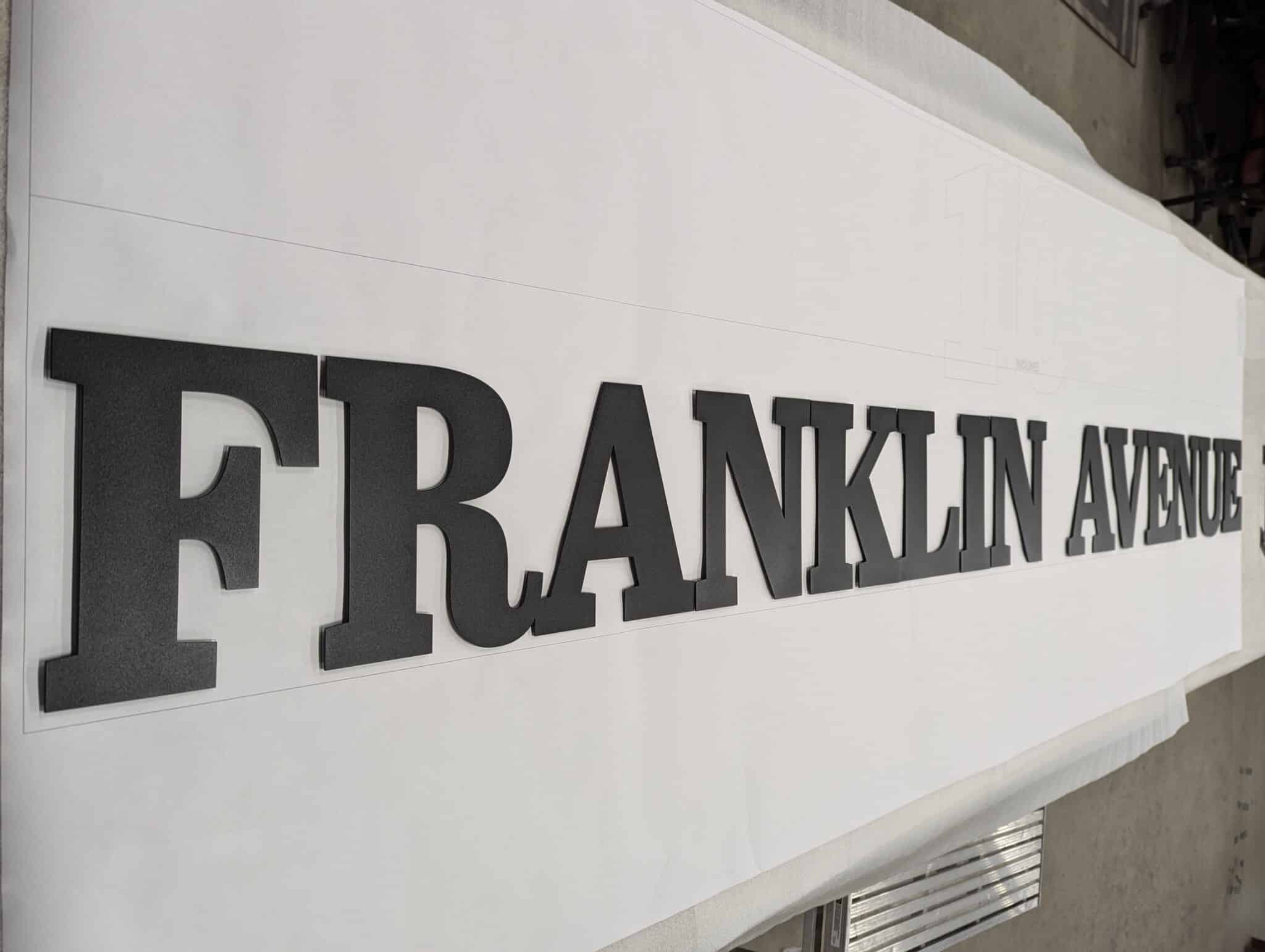
Custom metal building identification sign for 10 Franklin mounted on a modern architectural facade
10 Franklin building identification — the kind of architectural signage application where copper, brass, or stainless lift a project from “completed” to “considered.”

Designing Your Custom Copper Sign with ShieldCo

Whether you’re a restaurant in downtown Frederick looking to fit into a historic block, a boutique hotel in the DC metro area, or an architectural firm specifying signage for a project across the country, we approach copper the same way we approach every project: design first, fabricate to spec, ship and install with care.

Our typical process for a copper sign:

  1. Free quote and design consultation — share your logo and the rough size/location, and we’ll come back with options at a few price points and finish recommendations.
  2. 3D renderings or 3D mockups on your actual building or wall photo, so you can see how the copper finish reads in context before you commit.
  3. Fabrication in our Frederick, Maryland facility using precision laser cutting, hand-finishing, and any specified patina treatment.
  4. Free shipping nationwide via our in-house packing and shipping setup, or professional installation if your project is in our service area.

Signs we’ve shipped have been installed in 46 of 50 US states — so whether you’re around the corner from our shop or across the country, we’ve handled the logistics.

Start Your Custom Copper Sign Project

Browse more of our finished work in the project gallery, or read our recent complete guide to custom metal logo signs and how to choose a custom metal sign company for broader context on what to look for in a fabricator.

Filed Under: Custom Signs

April 22, 2026 by Luke Markey

Finding the right custom metal sign company can feel overwhelming—especially when a quick Google search for “metal sign company near me” returns dozens of options, each claiming to be the best. The truth is, most businesses only buy a major sign once or twice, so there’s little room for error. The good news: if you know what to look for, separating the great sign companies from the mediocre ones is straightforward.

By Luke Markey, Co-Founder of ShieldCo Art — custom metal sign specialists based in Frederick, Maryland, with signs installed in 46 of 50 US states.

Halo-lit custom metal logo sign for Johns Hopkins APL, a precision fabrication example from a custom metal sign company
Johns Hopkins Applied Physics Laboratory — halo-lit metal logo sign fabricated and installed by ShieldCo Art. This is the level of precision that separates good sign companies from great ones.

Why Your Choice of Sign Company Matters More Than You Think

A custom metal sign is a long-term investment in your brand. Unlike a printed banner or vinyl wrap, a well-made metal sign will represent your business for 15 to 25+ years. Choose the wrong fabricator, and you’re living with that mistake for a long time—or paying to replace it sooner than you should have to.

In our experience working with businesses across 46 states, the biggest regrets we hear from clients who came to us after a bad experience all come back to the same handful of issues: signs that faded or rusted within a few years, poor fit and finish, no in-house design support, or being passed off to an overseas manufacturer for fulfillment. We’ve seen it all.

Here’s how to avoid those mistakes and find a custom metal sign company that will deliver something you’re proud to put on your building.

Get a Free Quote from ShieldCo

7 Things to Look For in a Custom Metal Sign Company

1. In-House Fabrication vs. Outsourced Production

This is the single most important question to ask any sign company: Do you fabricate in-house, or do you outsource production? Many sign companies are really just brokers—they take your order and send it to a third-party (often overseas) manufacturer. This means less quality control, longer lead times, and someone who can’t answer specific questions about how your sign was made.

At ShieldCo, every sign is fabricated at our shop in Frederick, Maryland. That means we control the entire process—from laser cutting and laser engraving to powder coating and final assembly. If something isn’t right, we catch it before it ships, not after it’s mounted on your building.

2. Material Expertise and Transparency

Can they explain the real differences between aluminum, steel, stainless steel, brass, and copper? A knowledgeable sign company will help you understand which material is right for your application, your environment, and your budget—not just upsell you on the most expensive option.

For most outdoor business signs, powder-coated aluminum is the workhorse: lightweight, rust-proof, and available in any color. But if you’re putting a sign in a coastal environment, or want the warmth of a custom brass sign for a law office lobby, or the raw industrial look of distressed steel for a restaurant, a good sign company will walk you through the trade-offs. Our post on aluminum vs. stainless steel is a good starting point if you’re weighing those two materials.

Custom metal exterior sign for Navy Federal Credit Union fabricated by ShieldCo Art showing commercial-grade sign quality
Navy Federal Credit Union — a commercial-grade exterior metal sign requiring precise tolerances and durable finish. Projects like this require deep materials expertise to execute correctly.

3. Design Services and 3D Visualization

Most business owners aren’t graphic designers, and that’s okay. The right sign company will offer real design support—not just a template generator. Look for a team that can take your existing logo, suggest adaptations that work in metal, and show you a realistic preview before fabrication begins.

At ShieldCo, every project includes a 3D mockup so you can see exactly how your sign will look before we cut a single piece of metal. This step alone saves enormous headaches. We’ve had clients who thought they wanted a brushed stainless finish until they saw the mockup next to their brick exterior—and immediately switched to a dark bronze powder coat that looked ten times better.

4. Portfolio Breadth and Verified Work

Any sign company can take great photos of a single flagship project. What you want to see is consistent quality across diverse sign types, industries, and scales. Can they show you examples of 3D dimensional signs, backlit and halo-lit signs, interior lobby signs, and large exterior monument signs? Check their project gallery and look for real case studies—not just stock renderings.

Geographic breadth matters too. A company that only does local installs may not have the packaging, logistics, and installation network to deliver a sign to a remote location safely. ShieldCo ships nationwide with specialized custom packaging and works with a vetted installer network across all 50 states (signs installed in 46 so far). See our packing and shipping process for why that matters.

5. Finish and Durability Guarantees

How long will the finish last? Can they tell you the brand of powder coat they use? Are they applying two-stage powder coating for high-UV environments, or cutting corners with a single coat? These details matter more than most buyers realize.

We use industrial-grade powder coating on all exterior signs—the same finish systems used in the aerospace and automotive industries. The benefits of powder-coated signs go beyond appearance: a proper finish resists chipping, fading, and rust for decades. If a sign company can’t tell you specifics about their finish process, that’s a red flag. Read our powder coating overview to understand what questions to ask.

Halo-illuminated custom metal sign for PML Construction Inc. showing outdoor durability and professional fabrication quality
PML Construction, Inc. — halo-illuminated exterior sign. Outdoor signs need precise electrical integration and weather-resistant finish work. In-house fabrication makes this consistency possible.

6. Transparent Pricing and Lead Times

Be wary of companies that won’t give you a ballpark on cost until you’ve committed to a full design consultation. While custom signs are inherently variable in price (based on size, material, complexity, and quantity), an experienced company should be able to give you a rough range within the first conversation.

At ShieldCo, we’ve simplified our pricing model to be $200/sqft for simple single layer signs up to $400/sqft for more complex signs, when using our normal .09 gauge aluminum, and powder coated. These prices include delivery to you, but don’t include installation. Estimate the total square footage of your sign and multiply it by $200 and $400 and you’ll be in a close band that our team can work with to make you something great!

Lead times are equally important. A typical custom metal sign takes 4–6 weeks from approved design to delivery, though rush timelines are possible. If a company promises you a 10-business-day turnaround on a complex illuminated sign, ask very specific questions about how that’s possible. It often means in-house production.

7. Installation Support and After-Sale Service

Will they help you figure out how to mount the sign? Do they have installation partners? What happens if the sign arrives damaged?

Proper installation is often the forgotten half of a great sign. Even a perfectly fabricated sign looks bad if it’s hung crooked or mounted with the wrong hardware. ShieldCo provides detailed installation guidance with every shipment—including mounting templates, hardware recommendations, and access to our installer network when local installation help is needed. And if anything arrives damaged, we make it right.

Red Flags to Watch Out For

  • No physical address or shop location — if you can’t find where they actually make signs, they probably don’t.
  • All renders, no real photos — a portfolio of only CGI renderings suggests limited real-world production experience.
  • Vague answers about materials — “we use high-quality metal” isn’t an answer. Ask specifically: aluminum or steel? What gauge? What powder coat system?
  • No design process — if they’ll take your file and cut it without any design consultation, you may get exactly what you asked for but not what you needed.
  • No warranty or durability data — a reputable sign company stands behind their finishes and materials.

Local vs. Nationwide: Which Is Better for Your Business?

If you’re in the Maryland, DC, or Virginia market, you have the option to work with a local sign shop and visit in person—which has real value for large, complex installs. But for most business owners, especially those outside major metropolitan areas, limiting yourself to local sign companies means limiting your options significantly.

Nationwide fabricators like ShieldCo can often deliver better quality at comparable prices because of economies of scale in materials and equipment. Our production process is built around shipping signs safely anywhere in the country—from rural Montana to downtown Manhattan. Whether you’re outfitting a dental practice in suburban Maryland or a law firm in downtown Chicago, the level of care in fabrication and delivery is identical. Check our case studies for examples across industries and geographies.

Custom backlit metal logo sign for OpSite Energy company showing precision metal fabrication and LED lighting integration
OpSite Energy — custom backlit metal logo sign. Projects like this require in-house electrical expertise alongside precision metal fabrication — a combination many local shops can’t offer.

Questions to Ask Any Metal Sign Company Before You Commit

  1. Do you fabricate in-house or outsource production?
  2. What materials do you recommend for my specific application and why?
  3. Can you show me a 3D mockup before fabrication begins?
  4. What’s your powder coat system and expected finish lifespan?
  5. What’s included in your price—design, shipping, hardware?
  6. What’s the realistic lead time for my project?
  7. Do you provide installation support or connect me with local installers?
  8. What happens if the sign is damaged in shipping?

A good sign company will answer all of these confidently. If you get vague or evasive answers, keep looking.

Start Your Free Quote — No Commitment

Why ShieldCo Is Worth Considering

We’re not the right fit for every project—we specialize in premium custom metal signs and don’t compete on price with overseas commodity producers. But if you want a sign that lasts, represents your brand with precision, and is backed by a team that has fabricated signs for everyone from Johns Hopkins APL to Navy Federal Credit Union to independent restaurants and breweries, we’d love to talk.

Start with a free quote, browse our project gallery, or reach out to our design team to talk through your project. We’ll give you an honest assessment of what’s right for your situation—even if that means pointing you in a different direction.

You can also learn more about who we are and the process we use to build every sign from raw metal to finished installation.

Frequently Asked Questions

How do I find a reputable metal sign company near me?

Start by searching for companies with verifiable physical shop locations, not just websites. Look for a real portfolio of completed projects (photos, not just renders), read Google reviews carefully, and ask specifically whether they fabricate in-house. If a company can’t show you their shop or explain their production process, they may be brokering your order to a third-party manufacturer.

Is it better to use a local sign company or a nationwide fabricator?

It depends on your project. Local sign shops offer convenience for simple installs and in-person consultations. But for complex custom metal signs—especially with illumination or precise finishes—a specialized nationwide fabricator often delivers better quality, faster timelines, and more material options. ShieldCo ships to all 50 states with the same quality standards regardless of destination.

What questions should I ask before hiring a metal sign company?

Ask whether they fabricate in-house, what specific materials they use (not just “high quality metal”), whether they offer 3D mockups before production, what their powder coat system is, and how they handle shipping damage. These questions quickly separate experienced fabricators from resellers.

How long does a custom metal sign typically take?

For most custom metal signs, plan on 4–6 weeks from approved design to delivery. Complex illuminated signs or large multi-panel installations may take longer. Rush timelines are sometimes possible but add cost. Be cautious of companies promising 1–2 week turnarounds on complex signs—this often signals outsourced production with less quality control.

What’s a fair price for a custom metal sign for my business?

Custom metal sign pricing varies widely based on size, material, and complexity. Simple flat aluminum signs might start around $500. Mid-range business signs with powder coating and logo cutouts typically run $1,000–$5,000. Illuminated or 3D signs for larger businesses can range from $3,000–$15,000+. A transparent sign company will give you a detailed quote breakdown—not just a single number. See our business signage cost guide for a deeper breakdown.

Filed Under: Custom Signs

April 7, 2026 by Luke Markey

If you want a logo sign that turns heads, lasts decades, and feels like a real upgrade over the printed plastic alternatives, custom metal is the answer. Aluminum, steel, brass, and copper logo signs hold their finish for 15+ years outdoors, command attention in lobbies, and tell visitors that your business is built to last—all in one quiet, confident statement.

By Luke Markey, Co-Founder of ShieldCo Art — custom metal sign specialists based in Frederick, Maryland, with signs installed in 46 of 50 US states.

This guide walks through everything we wish more business owners knew before they bought a logo sign. We’ll cover the materials we work with every day, the finish options that actually hold up, the mounting and lighting choices that change the entire feel of a sign, and what you should expect to spend. By the end, you’ll be able to walk into a quote conversation knowing exactly what to ask for.

Custom dimensional metal logo sign for Seared Grill restaurant with bold lettering
A custom dimensional metal logo sign we built for Seared Grill—clean lines, deep dimension, and a finish that holds up in a high-traffic restaurant environment.

What Is a Custom Metal Logo Sign?

A custom metal logo sign is exactly what it sounds like: your company logo, fabricated from metal, designed to be displayed on a wall, building exterior, monument base, or freestanding mount. Unlike printed signage, a metal logo sign is cut from raw material—usually with a fiber laser—finished by hand, and built to last for the lifetime of your business.

The category covers a wide range:

  • Flat-cut metal letters mounted directly to a wall or backed by a metal plate
  • Dimensional logo signs with stand-offs that create depth and shadow
  • Backlit and halo-lit metal logos that glow when the lights come on
  • Multi-piece logo installations where each shape is fabricated separately and assembled on-site

In our experience fabricating logo signs for everything from restaurants to corporate lobbies, the buyers who get the best result are the ones who understand the basics before the quote. That’s what this guide is for.

Why Choose Metal Over Other Materials?

This is the first question most clients ask. The honest answer: metal isn’t always the right choice—but when it is, nothing else comes close. Here’s how the main options stack up.

Material Lifespan Indoor/Outdoor Best For
Aluminum 15+ years Both Most outdoor business signs, exterior building signage, and weatherproof installations
Stainless Steel 20+ years Both Premium indoor and coastal outdoor applications where corrosion is a concern
Brass / Copper 30+ years Both Luxury brands, historic buildings, and clients who want the patina to develop over time
Acrylic 5–10 years Mostly indoor Budget interior signs that don’t need to last more than a few years
Vinyl / PVC 3–7 years Both (limited) Temporary signage, event signage, low-budget applications

For most business owners we work with, the question isn’t really “metal vs. acrylic”—it’s which metal makes sense for the location and budget. We’ve put together a more detailed comparison in our guide on aluminum vs. stainless steel for metal signs, which is worth reading if you’re trying to choose between the two.

Get a Free Quote

Choosing the Right Metal for Your Logo Sign

Aluminum: The Workhorse

About 70% of the custom metal signs we fabricate are aluminum, and there’s a reason. It’s lightweight (which makes it easier and cheaper to install), it doesn’t rust, it accepts a wide range of finishes, and powder-coated aluminum holds its color in direct sun for over a decade. For exterior building logos, monument signs, and most lobby applications, aluminum is the default choice.

We use 5052 aluminum for most logo signs because it has the best balance of formability and strength. You’ll see it referenced on our spec sheets and in industry conversations—it’s the standard for sign-grade aluminum work.

Stainless Steel: The Premium Option

Stainless steel is heavier, more expensive, and harder to fabricate—but it has a presence that aluminum can’t match. Brushed stainless catches light differently throughout the day, and polished stainless reflects almost like a mirror. We recommend stainless when the client wants the sign to feel substantial, or when the installation is in a coastal environment where salt spray would shorten the life of any other metal.

Brass and Copper: For Brands That Want Character

Brass and copper are specialty materials. They cost more, they patina over time (which some clients love and others don’t), and they’re best suited to brands where craftsmanship is part of the identity—law firms, distilleries, historic restorations, jewelers. We’ve found that powder-coated aluminum holds up best for everyday business use, but when a client wants their logo sign to look like it belongs on a Brooklyn brownstone or a Napa Valley winery, brass and copper are the answer.

Custom halo-lit metal logo sign installed for SEBA with elegant glow effect
Halo-lit metal logo sign for SEBA. The LED backlighting creates a soft glow around each letter, transforming the sign at night.

Finish Options That Actually Hold Up

The finish on a metal logo sign matters more than most people realize. A bad finish job will fade, peel, or chalk in two or three years. A good one lasts as long as the metal underneath. Here are the finishes we use most often:

  • Powder coating: Our most common finish. Available in any color, extremely durable, holds up in direct sun for 10–15 years. We do all our powder coating in-house, which lets us control quality at every step.
  • Brushed metal: A natural finish where you see the metal itself with a directional grain. Works beautifully on aluminum and stainless steel.
  • Polished metal: A reflective, mirror-like finish. Stunning indoors, but shows fingerprints and dust—so we generally recommend it for higher installations.
  • Painted: Less durable than powder coating but allows for finer detail and gradient effects. We use it sparingly.
  • Patina (brass, copper, corten): An aged finish that develops naturally over time. Great for clients who want their sign to look like it’s been there for decades.

One thing we tell every client: don’t pick a finish based on a small swatch. Ask to see the finish on a piece of metal at least 12 inches square. Colors and textures look completely different at scale, and we’ve had more than a few clients change their minds when they saw the real thing.

Mounting Methods: Stand-Offs, Studs, and Stud Mounts

How a logo sign is mounted has a huge impact on how it looks. The same logo can feel completely different depending on whether it’s flush against the wall or floating an inch off the surface.

Flush Mount

The sign sits directly against the wall. Cleanest look, easiest installation. Best for interior walls where you don’t need shadow or depth.

Stud Mount

Threaded studs are welded to the back of the letters and inserted into the wall. The letters sit slightly off the surface, creating a small shadow line. This is the most common mounting method for indoor metal logo signs.

Stand-Off Mount

The letters are held off the wall with cylindrical metal stand-offs. This creates real dimension and a strong shadow effect, which makes the sign feel more important and substantial. We recommend this for lobby installations where you want the logo to be a focal point.

Pin Mount (No Visible Hardware)

Each letter has its own hidden pin pressed into the wall. The result is invisible mounting hardware and a clean, premium appearance. It takes longer to install but it’s our go-to for high-end corporate lobbies.

Lighting Options: Backlit vs Halo-Lit vs Front-Lit

If you want your logo sign to make an impact at night or in dim lobby lighting, you need to think about illumination from the start. Adding lighting after the fact is expensive and rarely looks as clean as a sign that was designed for it.

Halo-lit custom metal logo sign for Spark Membership creating dimensional depth on the wall
Spark Membership’s halo-lit metal logo. Notice how the LED glow defines the edges of each shape and adds visual weight without overpowering the room.

Halo-lit (back-lit): LEDs are mounted on the back of the letters, casting light onto the wall behind. The letters themselves stay dark, but they’re outlined by a soft glow. This is our most popular illumination style for premium logo signs.

Front-lit (face-lit): The face of each letter is translucent and lights up directly. Brighter and more visible from a distance, which makes it a better choice for exterior building signs that need to be readable from across a parking lot.

Lightbox: The entire sign is essentially a shallow box with the logo cut out of the front. LEDs inside push light through the openings. Common for storefront signs and businesses that need maximum visibility.

For more on illuminated options, our guide on lighted business signs goes deeper into the trade-offs between LED, neon, and other lighting technologies.

What Custom Metal Logo Signs Actually Cost

This is the question we get most often, and the honest answer is: it depends on five things.

  1. Size. A 12-inch logo costs a fraction of a 6-foot logo. Pricing scales roughly with square footage.
  2. Material. Aluminum is the most affordable. Stainless steel is roughly 2–3x the cost of aluminum. Brass and copper cost more again.
  3. Finish. Powder coating in a standard color is included in our base pricing. Custom colors, multi-color powder coating, and specialty finishes add cost.
  4. Mounting and lighting. A flush-mounted sign is the cheapest. Adding stand-offs adds cost. Adding LED illumination adds significantly more cost.
  5. Complexity. A simple wordmark is faster to fabricate than an intricate icon with overlapping shapes.

To give a useful range: most business owners spend between $2,000 and $7,500 on a quality custom metal logo sign. Smaller indoor signs can come in under $1,500. Large illuminated exterior installations can run $10,000–$20,000+. We have a more detailed breakdown in our post on the cost of business signage.

Request a Free Quote

How to Get a Logo Sign That Actually Looks Right

After 13 years of fabricating custom metal logo signs and shipping them to 46 states, here are the things we’ve learned matter most:

Large illuminated metal logo sign with backlit and halo-lit elements showcasing fabrication detail
A large multi-element illuminated logo project we built combining backlit, halo, and lightbox techniques—the kind of installation that needs to be planned from the design stage.
  • Send a vector logo file. AI, EPS, or SVG. A logo from a JPG or PNG can be redrawn, but it adds cost and slows the project down.
  • Decide on size before you decide on material. A logo that looks perfect at 18 inches might look lost at 12 inches and overwhelming at 36 inches.
  • Consider the wall. Sign shops can mount to almost any surface, but textured or uneven walls limit your options. If you’re building or renovating, pick the sign location early.
  • Plan for power. If you want lighting, the wall needs power before installation. Adding it later means cutting drywall.
  • Get a 3D mockup. A flat rendering can’t show you how a stand-off mount or halo light will actually look. We make 3D mockups for every custom logo sign we quote.

FAQs About Custom Metal Logo Signs

How long does it take to make a custom metal logo sign?

Most projects take 2–3 weeks from approved mockup to delivery. Larger or more complex installations can take 8–10 weeks. Rush orders are absolutely possible—ask us when you request a quote.

Can you match my brand colors exactly?

Yes. We powder coat in any Pantone or RAL color, and we can match samples or supplied paint chips. For very specific brand colors, we recommend approving a physical sample before final production.

Do you ship custom metal logo signs nationwide?

We do. ShieldCo is based in Frederick, Maryland, but we’ve shipped custom metal logo signs to 46 of the 50 states. Free delivery is included in our pricing.

Will the finish fade in direct sunlight?

A properly powder-coated aluminum logo sign will hold its color for 10–15 years in direct sun, which is far better than painted alternatives. Brushed and polished metal finishes don’t fade at all because the color is the metal itself.

What’s the difference between flat-cut and dimensional metal letters?

Flat-cut letters are a single piece of metal with no depth. Dimensional letters have built-up sides that give them visible thickness, usually 1/2 inch to 4 inches deep. Dimensional letters look more substantial and create stronger shadows, which is why they’re our most popular choice for exterior logo signs.

Ready to Talk About Your Logo Sign?

If you’re thinking about a custom metal logo sign for your business, the best starting point is a quick conversation. Send us your logo and a few details about where it’s going, and we’ll come back with a 3D mockup and an honest quote—no pressure, no high-volume sales tactics. We’ve been doing this for 13 years and our work is in 46 states. Whether you’re a restaurant in downtown Frederick or a corporate office in DC, we’d love to build something great for you.

Get Started With a Free Quote

Filed Under: Custom Signs

  • Page 1
  • Page 2
  • Page 3
  • Interim pages omitted …
  • Page 15
  • Go to Next Page »

Primary Sidebar

© 2026 ShieldCo Business Signs

Privacy Policy·Terms Of Use·Signage Purchase Agreement

ShieldCo Art logo
Manage Consent
To provide the best experiences, we use technologies like cookies to store and/or access device information. Consenting to these technologies will allow us to process data such as browsing behavior or unique IDs on this site. Not consenting or withdrawing consent, may adversely affect certain features and functions.
Functional Always active
The technical storage or access is strictly necessary for the legitimate purpose of enabling the use of a specific service explicitly requested by the subscriber or user, or for the sole purpose of carrying out the transmission of a communication over an electronic communications network.
Preferences
The technical storage or access is necessary for the legitimate purpose of storing preferences that are not requested by the subscriber or user.
Statistics
The technical storage or access that is used exclusively for statistical purposes. The technical storage or access that is used exclusively for anonymous statistical purposes. Without a subpoena, voluntary compliance on the part of your Internet Service Provider, or additional records from a third party, information stored or retrieved for this purpose alone cannot usually be used to identify you.
Marketing
The technical storage or access is required to create user profiles to send advertising, or to track the user on a website or across several websites for similar marketing purposes.
  • Manage options
  • Manage services
  • Manage {vendor_count} vendors
  • Read more about these purposes
View preferences
  • {title}
  • {title}
  • {title}